Tiny News Collective exists to support early-stage news entrepreneurs all across the United States who are raising their hands to provide community-focused news and information and places for community connection. We are who we are because of the founders we serve. And we want the journalism field, the civic information space and beyond to know about the creative, impactful work of these founders. To that end, we are thrilled to highlight their stories through an ongoing series of profiles and features.
For our latest feature, we checked in with Caroline Hwang, founder of Synonym Magazine. The volunteer-run magazine shares stories that embrace the complexity of immigrant and diasporic food culture around the world. Since launching its first issue in 2023, Synonym Magazine has hosted international breakfast events, cookbook swaps and other events that engage its community in California.
This month, Synonym Magazine will release the fifth edition of its magazine, titled “Sweets.” They have teased a website relaunch and shared sneak peeks of upcoming articles in their newsletter. With their relaunch around the corner, we spoke with Caroline about this new chapter.
Be sure to read to the end, where Leezel answers our *bonus question* about her advice to other news entrepreneurs.
1. What’s the origin story of Synonym Magazine and your reason for launching it?
The concept started as an idea for a cookbook about third-culture Asian American food, but I got bogged down trying to include all of Asia. A friend suggested I make a magazine instead. As a fan of print magazines — anyone else remember going to Barnes & Noble, grabbing a stack and flipping through them for hours? — it was the perfect solution. This way I could talk about the larger diaspora, from the immigrant diaspora to third-culture kids to the global majority.
I also found that so much food and culture media came from a white lens, even when covering food from another culture. Having grown up as a third-culture kid, that hit a lot of triggers for me. I wanted to bring ownership back to the communities and cultures where these stories began, and to explore foodways and cultures through migration, colonialism and adaptation. My goal was to create a place for these complex stories to be shared, so underrepresented communities could feel seen and connected.
Our volunteer-run team is made up of me and three editors — Lisa, Remy and Jessica (we sadly just lost one to other work demands). Nidia is our visuals director, and Joel is our design director. We’re looking to expand with another editor and a visuals editor, though being volunteer-run makes that difficult. Most of our team comes from the editorial world and/or the photo production industry — like me; my full-time job is as a food stylist. That’s been invaluable, giving us connections to photographers and stylists and a real understanding of what a photoshoot entails. Just as important, the majority of our team, along with the artists and writers who work on the magazine, are from the global majority, which goes back to making sure the stories we tell come from within the diaspora.
At first, our readers were mainly in the United States, primarily Los Angeles, San Francisco and New York. But as our readership has grown and our calls for pitches have expanded, it’s become far more global, reaching parts of Europe — particularly the U.K. We also have a growing readership in Mexico, largely thanks to our participation in art book fairs like Index and Hardcore. As migration reaches every corner of the world, we hope to reach more of these communities and expand the stories we tell.

2. Is there a particular moment when you feel you made an impact on your community with a story or an event?
I feel like we’re still a bit too new to know whether we’ve made an impact — even three years in. But the moments when I feel the publication is resonating are most often at events: a pop-up, an activation or an art book fair. We’ll have a reader who has read all the back issues and came specifically to find us, wanting to talk about how meaningful it is to see a magazine that creates space for the diaspora — how they’d discovered a cultural experience they hadn’t known before, yet could still sense a familiarity in. That’s when I feel we’re on the right track: when people can see the through line across all these cultural and diasporic experiences — that we’re all Synonym.
We have a new shirt that says “Same Same But Different,” and in a way that exemplifies what and who we are: even though our experiences and stories are all nuanced and distinct, there’s a through line connecting them.
For instance, in a past issue one of our editors wrote a piece about how a family recipe could never be replicated, because her grandfather’s touch (his “taste of the hand,” or sohn-mat in Korean) was the essential “spice” (“The Mystery Spice,” Issue 03: Spices). In Issue 02: Rice and Beans, we interviewed Palestinian chef Fadi Kattan, who spoke of nafas, a concept referring to the spirit or breath that makes a person’s cooking taste exceptional. When we see the connection between different cultures and heritages, the feeling of being seen and sharing becomes its own kind of belonging.
3. Tell us more about your International House of Breakfast events. What inspired you to host these events and what is your events strategy for the magazine?
This year, we decided to slow our publication schedule to one issue so we could concentrate on growth and sustainability. As part of that, we’re doing more events, book fairs and pop-ups to raise awareness, sell the magazine and create a space to gather. That’s how we came up with the series International House of Breakfast.
I’ve always loved breakfasts from all over the world — congee, rice and beans, soups, stews. Growing up Korean-American, I’m used to savory foods in the morning, so a pop-up felt like the perfect way to showcase international breakfast. It also plays into our broader events strategy: we can set up a table to sell magazines and merch, gain subscribers and raise awareness. Because we’re mainly a physical product, selling online alone isn’t viable — we have to be out there selling the magazine in person.
For the breakfast event, we partnered with CHIFA, a local Chinese-Peruvian restaurant, to use their back patio. They don’t do service in the mornings, so it was a perfect opportunity to take over the space. Their sister restaurant, Arroz and Fun, and Cipota Coffee (which we’ve featured in a previous issue) had just started a weekday morning residency, which we thought would be mutually beneficial for building brand awareness.
The plan was to host four themed breakfasts with different chefs from the diaspora — once a month over the summer — with ticket sales on Eventbrite alongside walk-ups, splitting the revenue between the restaurant, the chef(s) and us. In the end we did three rather than four, due to staffing and resources: Vietnamese, Chino-Latino and Filipino breakfasts. Each came with a couple of activations — a seed exchange, a community dyeing workshop and breakfast karaoke — and we set up a table to sell the magazine and merch while signing people up for our mailing list.

4. Tell us about your business model, how you generate revenue, and how you plan to become sustainable in the long run.
We’re a volunteer-run, self-funded social enterprise. We generate revenue mainly through magazine sales, subscriptions, sales of merch, ticketed events, along with fundraising and grants (we have yet to land one, but I’m hopeful!).
On September 15, we’re relaunching with a brand-new website as well as print and digital subscriptions, with all profits going right back into the magazine. We’re also exploring brand partnerships and advertising to help us become more sustainable over time — of course, ones that are aligned with our mission and ethos are essential. We want the partnership to be mutually beneficial to where we can raise brand awareness and sales for a small, diasporic business while also raising a bit of revenue for ourselves.
Some of the businesses and brands we’re looking into are food-related companies we’ve featured in our “Community Board” (which is our version of editor’s picks) like Burlap & Barrel, Diaspora Co., Sanzo, Graza among others, as well as book publishers since we do a big highlight on cookbooks. We are further exploring ideas of partnering with bigger businesses like Square, Shopify, Etsy, American Express for events. We’ve been asked to pitch programming for a well-known, large event but need funds to produce, staff and pay honorariums for our panelists. Partnering with bigger businesses and brands would help us fulfill this.

5. The fifth edition of your magazine, titled “Sweets,” is coming out soon. You’ve been talking about expanding your team and have been teasing Synonym’s growth. Tell us more about your growth and your vision for the future.
We haven’t quite expanded our team yet, but we’re hoping to. The challenge is that we’re volunteer-run, so it’s a big ask for someone to join. We’re currently looking for another editor (one recently left us) and another person to join our visuals team.
As mentioned, we’re relaunching our website with print and digital subscriptions and a whole new member platform. Next year, we’ll return to two issues a year and host more events, hopefully all over the United States. We want to create panels, discussions and gathering spaces to further share the stories and experiences of the diaspora. We also want to create more mutual aid and fundraisers for other organizations that are aligned with our ethos. We’ve raised funds in the past for Inclusive Action for the City, which advocates for street vendors in Los Angeles, and Coalition for Humane Immigrant Rights. We hope to keep expanding this part of our efforts.
Our hope is to keep growing globally and reaching the global diaspora, because there are so many more stories to tell — the Chinatowns of India, the Italian occupation of Somalia that influenced a national dish, the ever-evolving pho in Houston like brisket pho. I could go on and on.
6. What is one piece of advice you would give other entrepreneurs working to launch their own news organization?
Community and collaboration! Reach out to as many people as possible for whatever opportunities might arise from collaborating. Collaboration and community are key — not just for the growth and awareness of your own organization, but as a space to ask for help and resources.
Learn more about other TNC founders by reading these stories:
 TNC
TNC
 TNC
TNC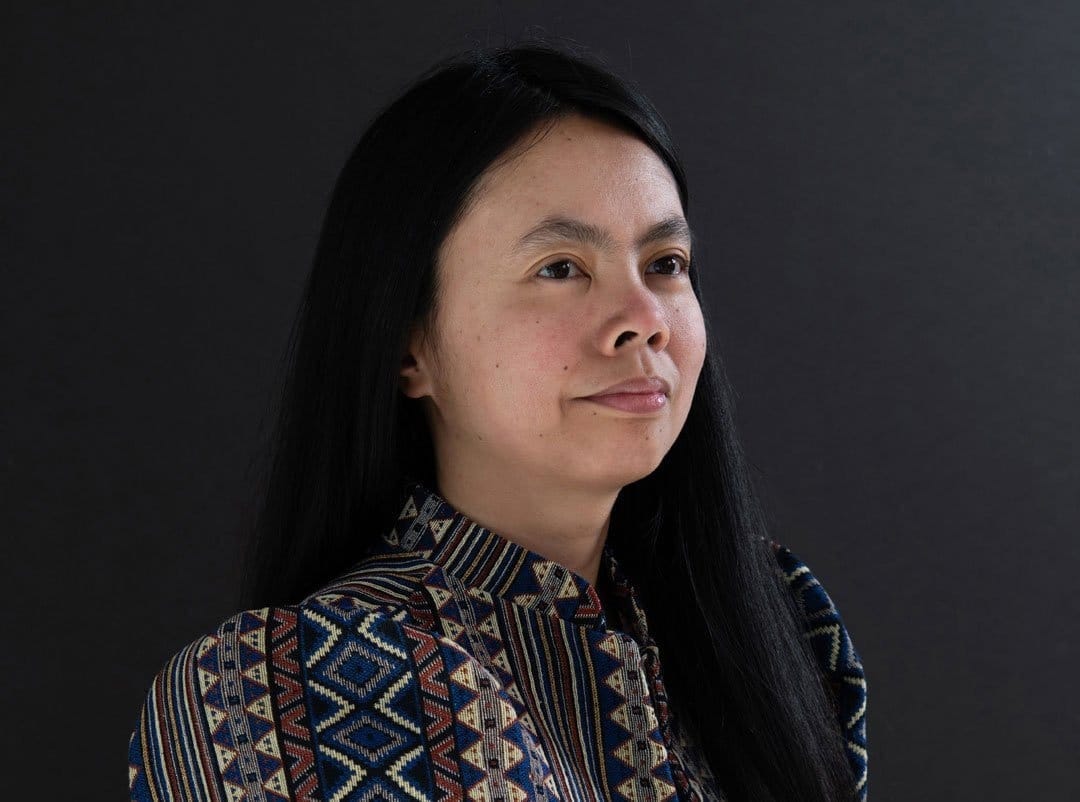
 TNC
TNC
 TNC
TNC
 TNC
TNC