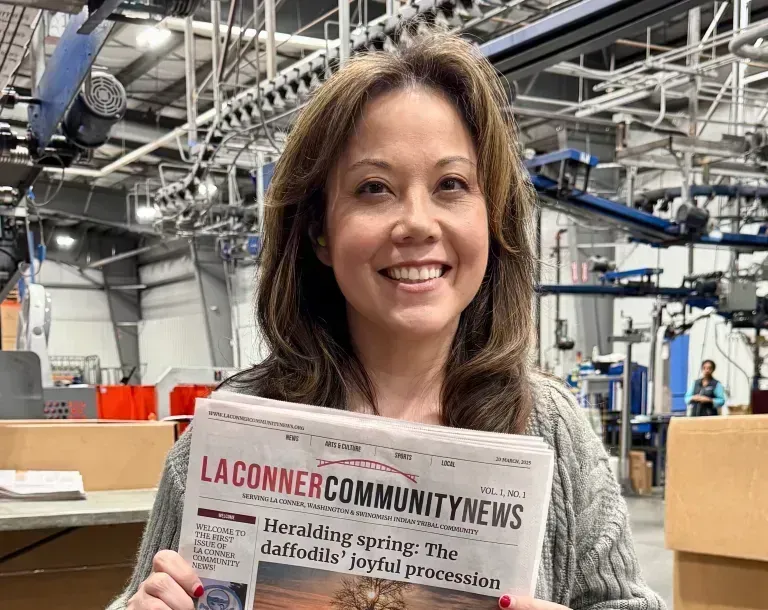
Tiny News Collective exists to support early-stage news entrepreneurs all across the United States who are raising their hands to provide community-focused news and information and places for community connection. We are who we are because of the founders we serve. And we want the journalism field, the civic information space and beyond to know about the creative, impactful work of these founders. To that end, we are thrilled to highlight their stories through an ongoing series of profiles and features.
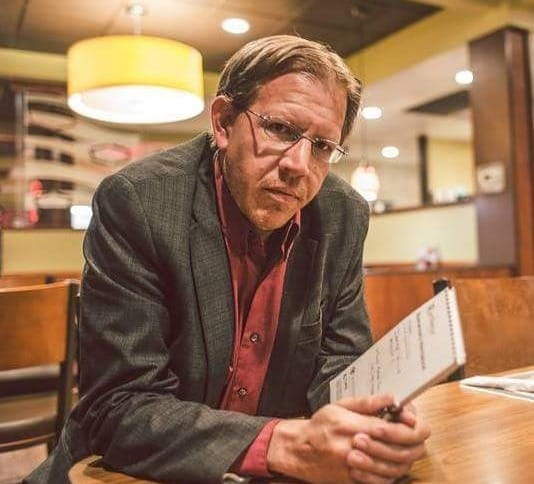
For our latest feature, we checked in with Damien Willis, the founder of Organ Mountain News, a publication covering Doña Ana County and the surrounding areas of southern New Mexico. One of the only locally owned and independent news outlets in the area, Organ Mountain News launched in 2024 and works to provide its community with paywall-free news.
Damien is an award-winning journalist who worked at the Las Cruces Sun-News for over 15 years as a weekly columnist and then as a reporter. After spotting gaps in local news coverage, Damien launched OMN to provide community members with a centralized news site where they can learn more about their community.
1. What’s the origin story for Organ Mountain News and your reason for launching it?
Organ Mountain News (OMN) started as a response to gaps in local coverage that became increasingly hard to ignore. Important community stories, local developments and day-to-day information that people rely on simply weren’t being covered consistently.
I had spent years working in local media and knew there was still strong demand for timely, reliable information at the community level. What I kept hearing — both directly and indirectly — was frustration. People didn’t know what was happening with local government, public safety incidents or even basic day-to-day developments unless they went looking across multiple sources. In many cases, they just missed things entirely.
Doña Ana County is a large and diverse region in southern New Mexico, bordering Mexico. It is anchored by the city of Las Cruces, but it stretches into rural and underserved communities where access to consistent local coverage — and even basic infrastructure — can be limited. There’s a real need for clear, centralized information that reflects the full scope of what’s happening across the area.
OMN began with a focus on showing up every day and building trust through consistent listening and publishing — covering a wide range of local issues and evolving over time as audience needs became clearer.
2. Is there a particular moment when you feel you made an impact on your community with a story or feature?
Yes — one of the earliest came just a few months after launch.
In February 2025, Organ Mountain News was the first to report that Ben Archer Health Center — a sliding-scale community clinic — had begun requiring proof of citizenship before providing care. That resulted in undocumented patients, including children, being turned away. Diabetics were reportedly being turned away from their pharmacy when seeking life-saving medications.
Within 24 hours of that reporting, the health center reversed course after receiving guidance from state officials, and the New Mexico Department of Justice opened an investigation.
That moment made it clear what consistent, fact-based local reporting can do. It wasn’t about volume or reach — it was about showing up, getting the story right and making sure the community had accurate information when it mattered most.
 Damien Willis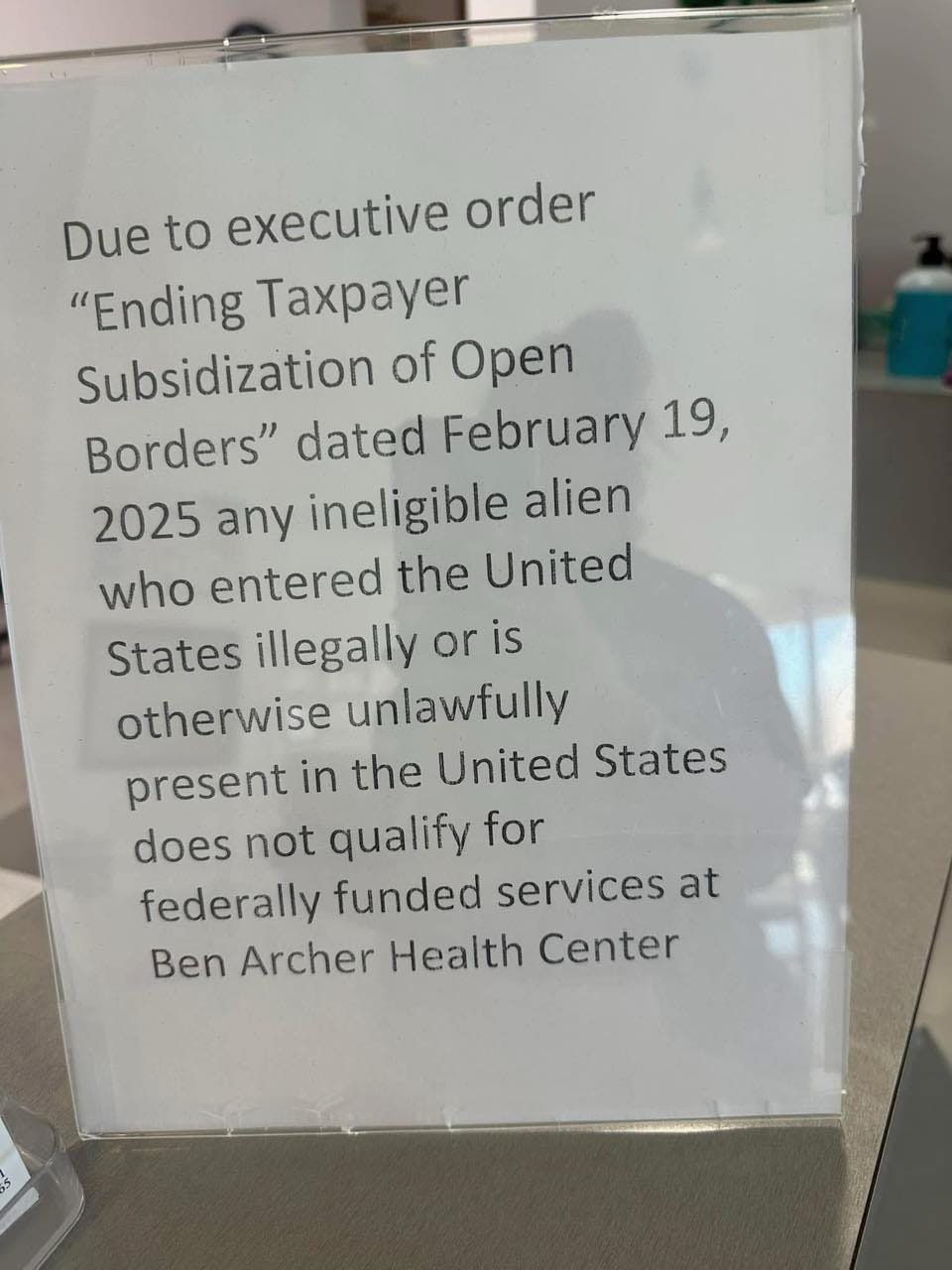
Organ Mountain News' reporting on a health center turning away undocumented patients led to a change in policy and a statewide investigation.
3. In March, you reached a milestone of publishing 1,000 stories. How did you achieve such consistent publishing as a young news organization?
When you're a one-person news operation, consistency comes down to workflow and discipline. I built a system that allows for fast turnaround without sacrificing accuracy — working directly from documents, public records and verified sources, and structuring each story in a way that prioritizes clear, essential information first.
Tools like transcription software and AI-assisted analysis can help process dense documents or long meetings more efficiently, which is important when you’re working at this scale. But they’re most useful as a starting point — helping organize information and identify what matters — rather than something you rely on to produce a finished story. The reporting, verification and final writing still come down to editorial judgment.
That approach keeps the process lean. Instead of waiting on multiple layers of input or overcomplicating the workflow, I focus on what’s confirmed, what’s relevant and what the reader needs to know right now.
The mix of coverage is intentional. On any given day, that can include breaking news, public safety incidents, local government decisions, court filings, community developments and education-related stories. Some are quick-turn updates, others require more context, but together they create a more complete picture of what’s happening across the community.
Rather than waiting for perfect conditions, I focus on maintaining a steady publishing rhythm across that mix of coverage. Over time, that consistency compounds. One story becomes 5, 5 becomes 50 and eventually you look up and you’ve published 1,000.
4. Tell us about your business model, how you are bringing in revenue and how you plan to become sustainable in the long run.
Right now, OMN is in the early stages of building a diversified revenue model. That includes grants, partnerships and the development of reader-supported funding through platforms like MonkeyPod, provided through Tiny News Collective fiscal sponsorship.
So far, that approach is starting to show traction. OMN has received grant support through the Listening Post Collective, and is currently participating in our second Google News Initiative accelerator focused on sustainability and growth. Those opportunities have helped provide both funding and strategic guidance as the newsroom continues to develop.
There are also early-stage partnerships taking shape at the local level. That includes working with Doña Ana Community College and the Journalism + Design Lab on a grant-supported initiative to place student interns in community newsrooms, including OMN, to help expand coverage while creating new pathways into local journalism.
The long-term goal is to combine multiple revenue streams — small-dollar donations, sustaining business sponsorships and community-supported initiatives — rather than relying on any single source. Sustainability for a newsroom like this comes from building trust first, then creating opportunities for readers and partners to support the work. And quite frankly, exactly what that looks like long term is still taking shape. The model is evolving, but the foundation is clear.
5. What’s your vision for Organ Mountain News this year and what it might become over time?
This year is about strengthening the foundation — growing the audience, launching the newsletter and beginning to bring in additional contributors, including student interns.
Long term, the vision is to build OMN into a reliable, community-centered newsroom that consistently delivers essential local coverage. A big part of that is actively listening to the unmet needs of the community and letting those conversations drive our coverage.
Over time, that means continuing to broaden the scope of reporting while maintaining the speed, clarity and consistency that have come to define the site as it is today.
Learn more about other TNC founders by reading these stories:
 TNC
TNC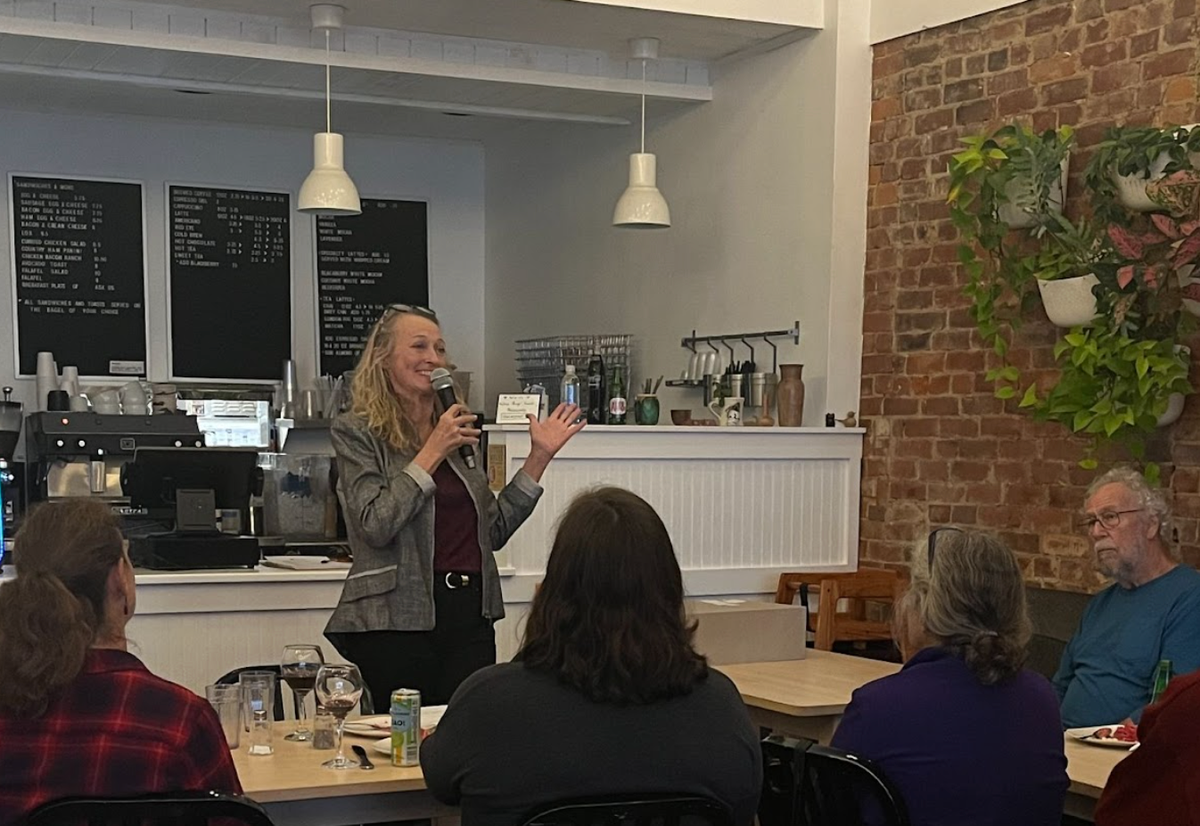
 TNC
TNC
 TNC
TNC
 TNC
TNC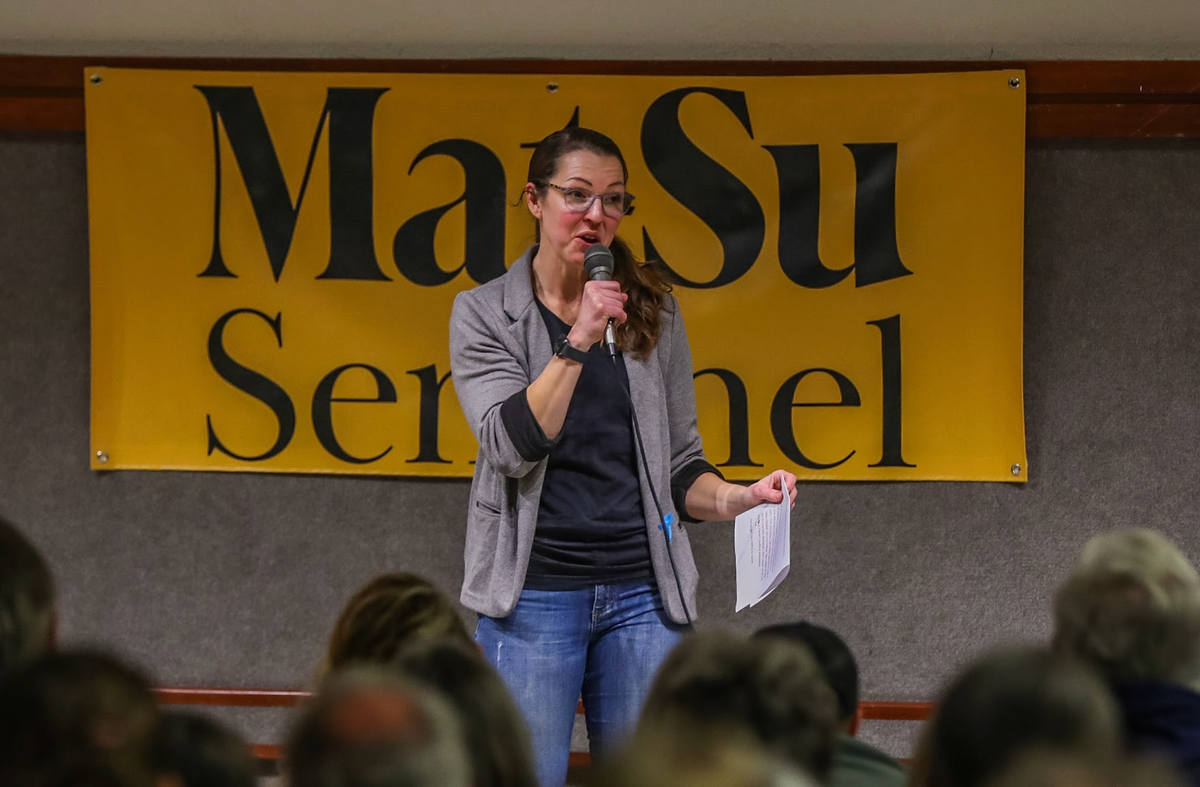
 TNC
TNC