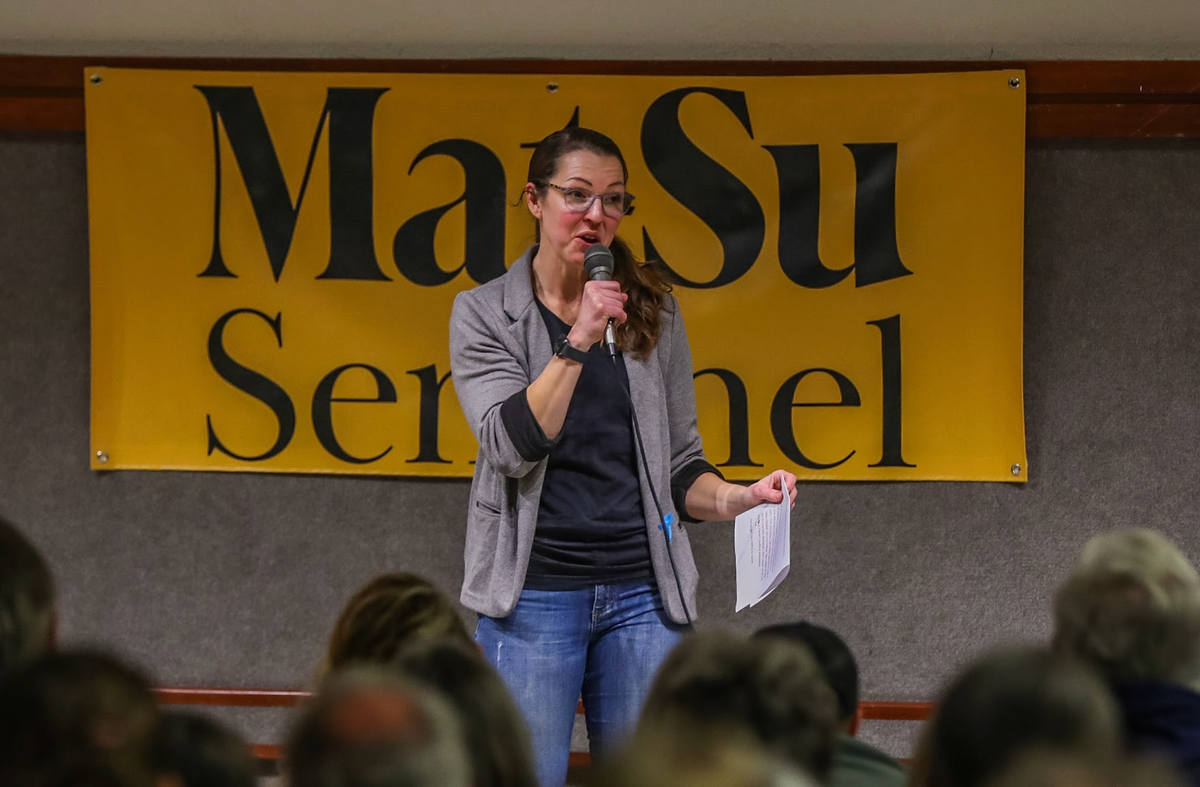
Tiny News Collective exists to support early-stage news entrepreneurs all across the United States who are raising their hands to provide community-focused news and information and places for community connection. We are who we are because of the founders we serve. And we want the journalism field, the civic information space and beyond to know about the creative, impactful work of these founders. To that end, we are thrilled to highlight their stories through an ongoing series of profiles and features.
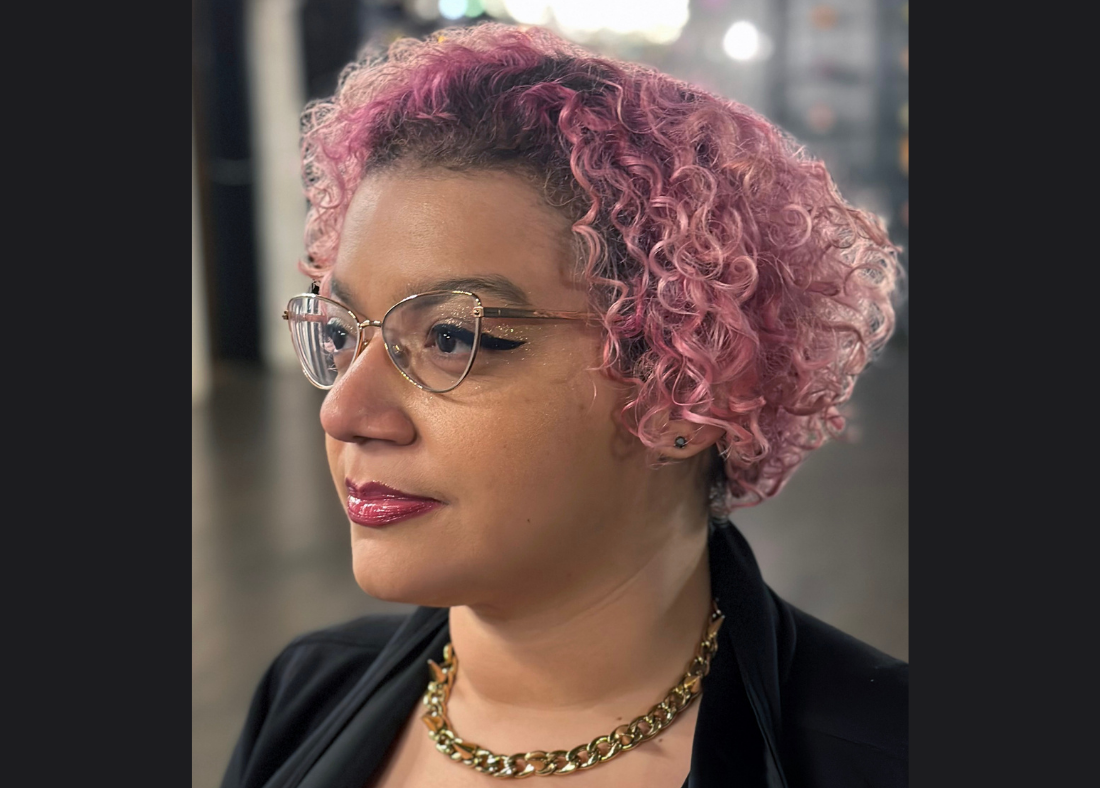
For our latest feature, we checked in with Jillian Melero, founder of Connect Puerto Rico, a monthly newsletter covering the policies, infrastructure projects and decisions shaping renewable energy development in Puerto Rico. Through her work, Jillian connects members of the Puerto Rican diaspora and keeps them informed about energy developments on the island. She brings more than a decade of experience in journalism, reporting on climate change, immigration and LGBT communities for organizations like WTTW News and Climate Central.
Be sure to read to the end, where she answers our *bonus question* about her advice to other news entrepreneurs.
1. What’s the origin story of Connect Puerto Rico and your reason for launching it?
I launched Connect Puerto Rico in 2023, but the origin story started in 2019.
I spent some time in Puerto Rico to research and report on its transition to renewable energy. This was two years after Hurricane Maria. Puerto Rico had suffered through the longest blackout in U.S. history. The casualties — resulting from the power outage and loss of essential services — were estimated at around 3,000 people.
Afterward, there was a narrative in the media about rebuilding Puerto Rico into a "renewable energy utopia.” So I went there hoping to see that. Instead, I learned a lot about the things stopping Puerto Rico from getting there:
- First, the outdated infrastructure
- Second, the lack of a large enough local workforce to install and maintain new infrastructure fast enough.
- Third, a reliance on companies and workforces from outside of Puerto Rico, which weren’t communicating or collaborating with local communities to meet their wants and needs on plans and project development.
Each of these issues were symptoms of longer standing, systemic problems. I came away from that experience admiring the work people were doing around these issues already. For long afterward, I wondered if there was a way I could get involved — thinking about what the solutions to something so intersectional and overlapping could look like.
I started testing out the idea of Connect Puerto Rico in late 2023, early 2024 after completing the Entrepreneurial Journalism Creators Program at CUNY. At the time, it was more of a first-person, long-form roundup of news headlines and opinions scoured from social media. But people seemed to respond to it right away. I got a lot of reader feedback about the need for that type of coverage and analysis. A lot of people in or from Puerto Rico were confirming and adding to my take on things, which was less about my take and more about what I was reading or hearing about from engineers, academics and reporters in Puerto Rico.
2. Is there a particular moment when you feel you made an impact on your community with a story?
I realized Connect Puerto Rico had real traction when I started noticing people beyond my immediate circle subscribing to the newsletter. Engineers and energy companies working in Puerto Rico, academics from universities all over the United States, lots of other climate and environment journalists — which I didn’t expect but which makes sense — and eventually government officials — folks with House, Senate and White House emails.
I started receiving informal testimonials from people who were following the work, either via reader surveys or from people who would message me directly to let me know how the work was helping them.
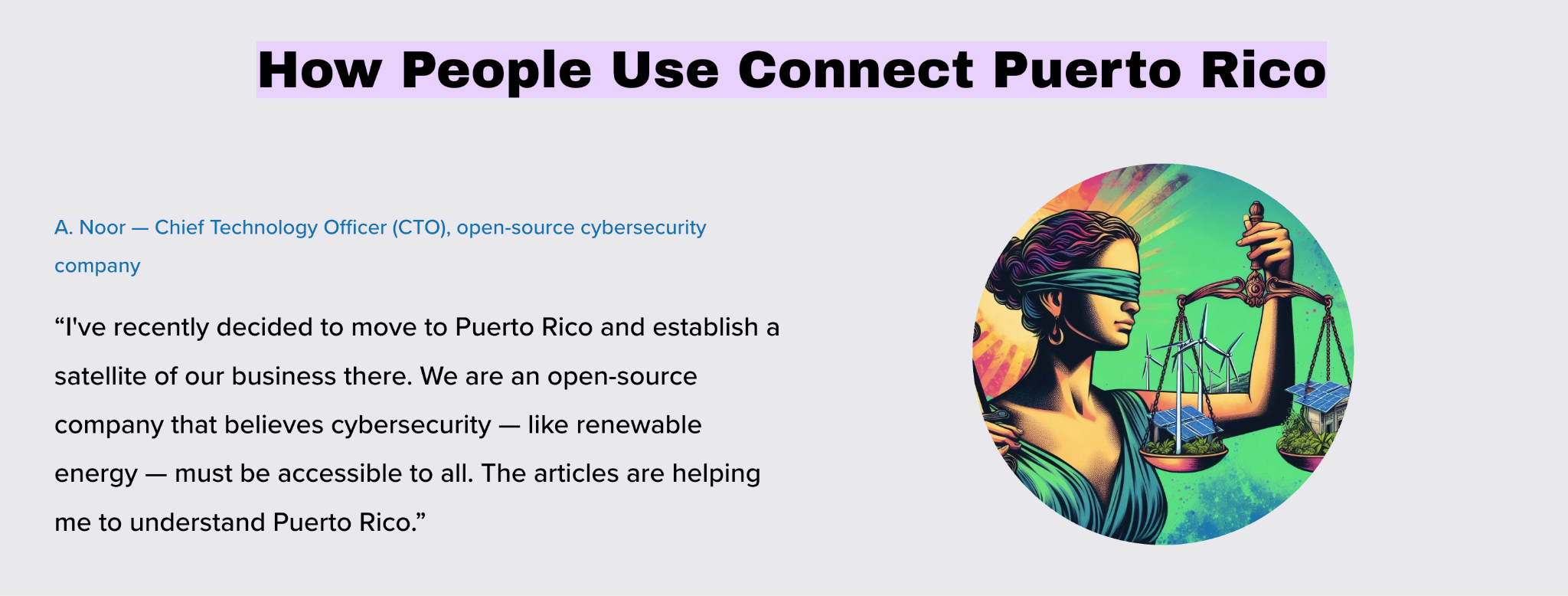
3. Connect Puerto Rico received grant funding to conduct in-depth interviews and virtual listening sessions with renewable energy professionals and other leaders based in Puerto Rico. How has that project and other listening and audience-building efforts been going?
As a solo founder, and being based in Chicago, organizing this particular listening project has been tricky. Especially because it’s meant to assess the information needs of residents in Puerto Rican communities.
I’ve been working to partner with Puerto Rican outlets and organizations or with contractors living in Puerto Rico to help facilitate outreach for the sessions, and later dissemination of the information and results.
We’ve been inviting people working in the energy sector — on the policy, project development or funding side as well as community leaders and organizers — to participate in rolling, virtual, Energy Listening Sessions. These sessions consist of a 60-90 minute forum where we talk about their role in Puerto Rico’s energy sector, how they receive and share information, and where things seem to slow down or get lost.
The project was made possible by a grant from the Listening Post Collective (a partner of Tiny News Collective’s), so I’m able to bring in a bit of support there in terms of outreach and facilitation.
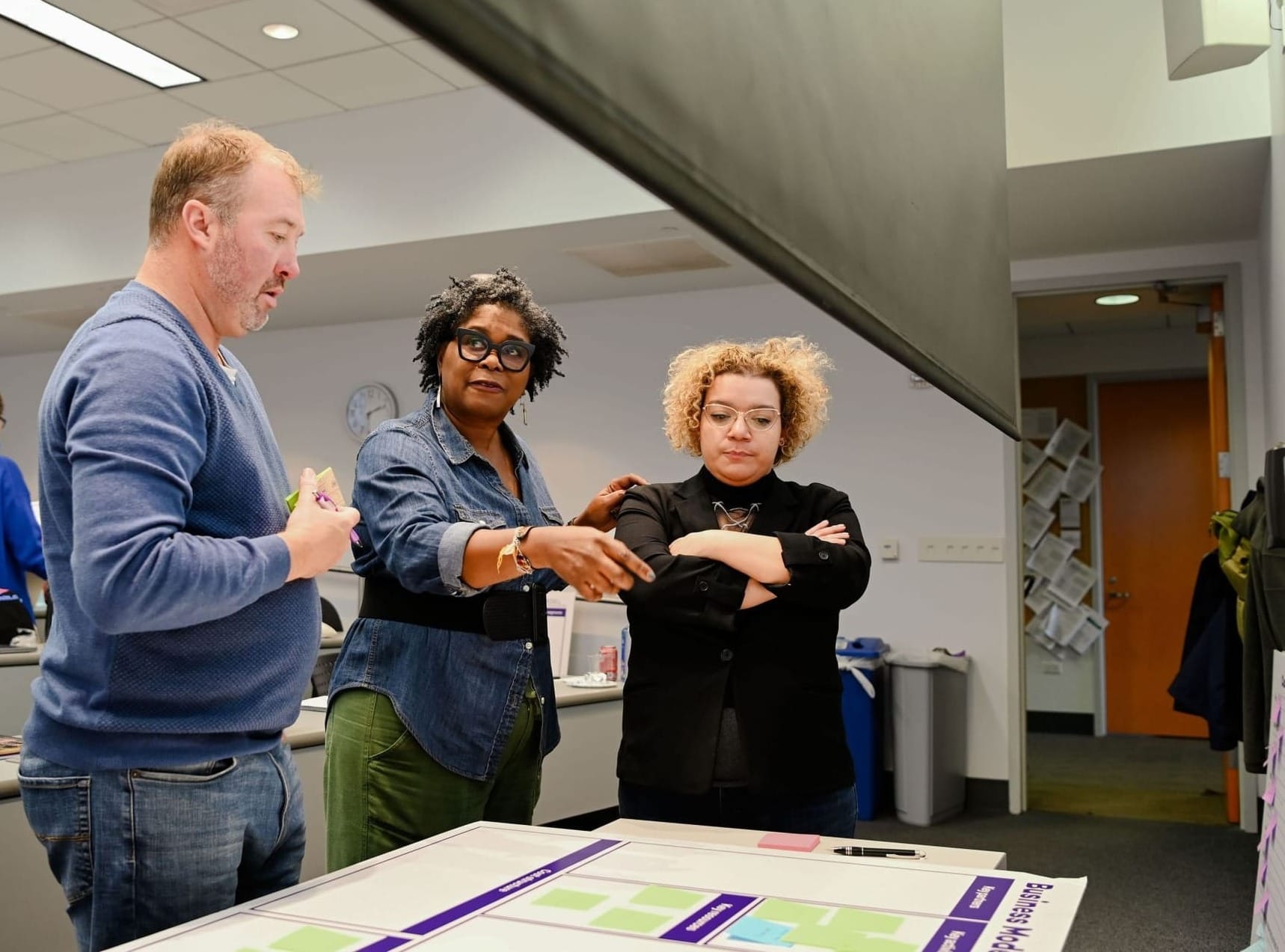
Otherwise, as a solo, the listening and audience-building efforts have been on a personal, one-on-one basis. I’m really the face and voice of CPR at every opportunity. That ranges from in-person or virtual networking at conferences and workshops to developing skills and learning strategies in professional cohorts including the EJCP, the Google News Initiative Startup Lab, The Medill Local News Accelerator and Project C. In terms of online presence, I’ve focused on building CPR’s presence on LinkedIn because of its need to reach engineering, business and policy audiences.
From the start, it’s been a goal of mine to bring on a dedicated social media content creator and a dedicated audience engagement liaison ASAP to broaden and deepen those audience-building and listening efforts. When we secure grant funding to do that, that will be a catalyst for Connect Puerto Rico’s reach, growth and impact.
4. Tell me about your business model, how you are bringing in revenue and how you plan to become sustainable in the long run.
Connect Puerto Rico is designed to run lean and nimble.
The newsletter, as it is now, is the minimum viable product. Once a month, I source and summarize energy, policy and business reporting and analysis from outlets like the Associated Press, Canary Media, el Centro de Periodismo Investigativo and others.
As we continue to grow the audience for CPR and assess its needs, the plan is to expand to more specialized content, services and events.
My long-term goals are to have it run with a team of three to five core staff and to build relationships with reporters in Puerto Rico and in Puerto Rican communities across the United States, collaborating with other newsrooms and community organizations.
At this time, there’s no cost to subscribe to the newsletter. That’s been a choice as we continue to grow and learn from our audience, drilling down on the information gaps we can help bridge and the specialized services we can provide.
We recently opened up a small number of sponsorship opportunities to help fund CPR’s growth and reporting. In return, partners receive visibility and access to CPR’s professional audience working across Puerto Rico’s energy, infrastructure and policy sectors, while editorial coverage remains independent.
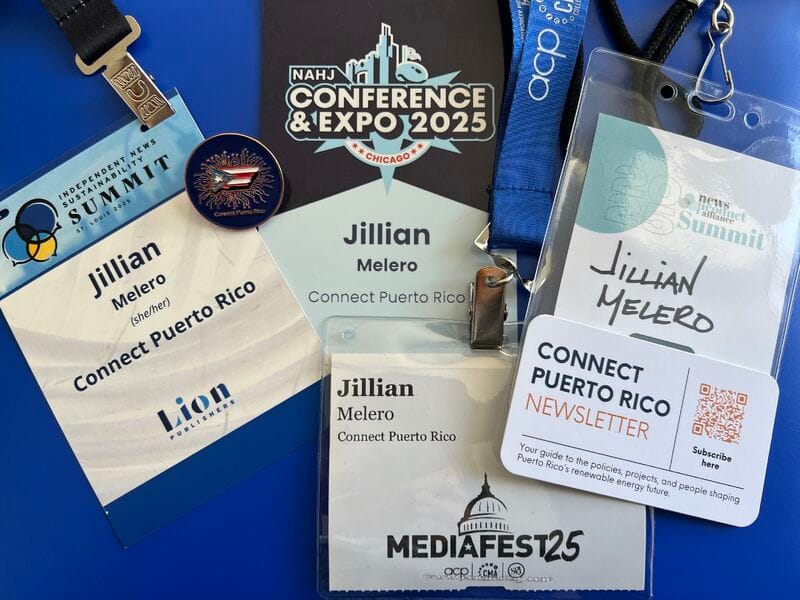
In the meantime, I’ve been applying for grant funding to help Connect Puerto Rico build capacity and bridge the gap to sustainability. In the long run, our revenue mix will include reader revenue as well as sponsorships and partnerships, so we’re not reliant on grants or philanthropic funding.
5. What’s your vision for Connect Puerto Rico this year and what it might become over time?
My focus for this year has really been on building the infrastructure that’s going to make Connect Puerto Rico sustainable and impactful beyond me as one person.
That includes rapidly testing out different ideas, like the community listening project, or the weekly, “Energy Workforce Watch” I started publishing on LinkedIn in March.
I launched EWW as a way to track hiring, project activity and workforce needs across Puerto Rico’s energy and infrastructure sectors. The weekly LinkedIn posts surface new roles and developments in real time, and the monthly newsletter uses those postings to identify larger trends tied to workforce development, policy and project implementation.
It includes establishing new professional partnerships — I’m in conversation with a few organizations that I’m excited about — and separately, having those financial sponsorship conversations and exploring new opportunities.
The long-term vision for Connect Puerto Rico has multiple layers; the newsletter is just our starting point.
The big-picture goal of CPR is to accelerate renewable energy, infrastructure and workforce development in Puerto Rico. And to do so in a way that supports and strengthens Puerto Rican communities.
The means to that end include informing policy and driving investment where it can make the biggest impact. So our vision for that is to build community and to foster collaboration across sectors to identify problems, discuss possible solutions and figure out where and how Connect Puerto Rico can best support those efforts.
But another, more personal layer to that has been to connect Puerto Rican communities across the United States to one another and to news about and affecting Puerto Rico. As a second-generation NuYorican — someone of Puerto Rican descent born in New York — and someone who has lived in several different places — in New Jersey, then all around South Florida, and now Chicago — it was hard for me to feel rooted in any one place.
So the core of all of this has also been about creating space to connect and advocate for a community that has been displaced or dispersed. And to come together around the causes that will strengthen that place where we all came from, where some of us still have family and friends, and where some of us may live again or for the first time.
Bonus question: What is one piece of advice you would give other entrepreneurs working to launch their own news organization?
As a solo founder, it’s been crucial for me to think about my own capacity and to plan accordingly. Not just to assess and address my strengths and weaknesses, but to think about what energizes me versus what drains me.
That can be for big picture things like strategic planning or smaller, day-to-day things like prioritizing tasks and blocking out time for production, for relationship building, for outreach.
I’ve had to think about how I like to work and how best to do that, but also what it looks like to work with contractors, and beyond that, what systems, processes, procedures we’ll need to have in place as Connect Puerto Rico builds out its own team.
It’s all a balancing act of doing what you can do right now, laying the groundwork for what’s to come, but not thinking so far ahead that you paralyze yourself or try to do too much too quickly. It’s about long-term sustainability, and designing for impact versus coverage and content creation alone.
Learn more about other TNC founders by reading these stories:
 TNC
TNC
 TNC
TNC
 TNC
TNC
 TNC
TNC
 TNC
TNC