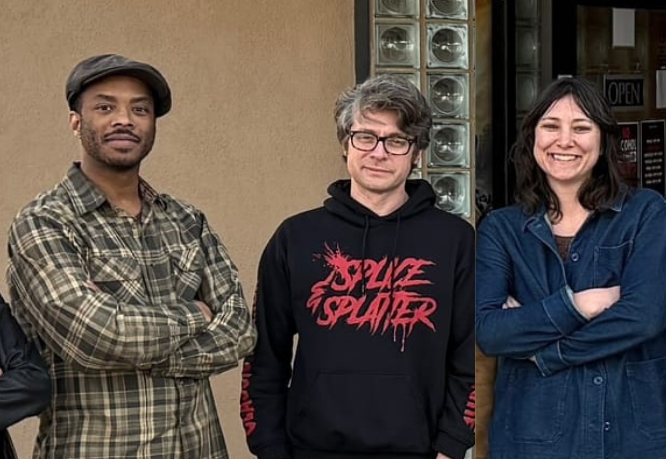
Tiny News Collective exists to support early-stage news entrepreneurs all across the United States who are raising their hands to provide community-focused news and information and places for community connection. We are who we are because of the founders we serve. And we want the journalism field, the civic information space and beyond to know about the creative, impactful work of these founders. To that end, we are thrilled to highlight their stories through an ongoing series of profiles and features.
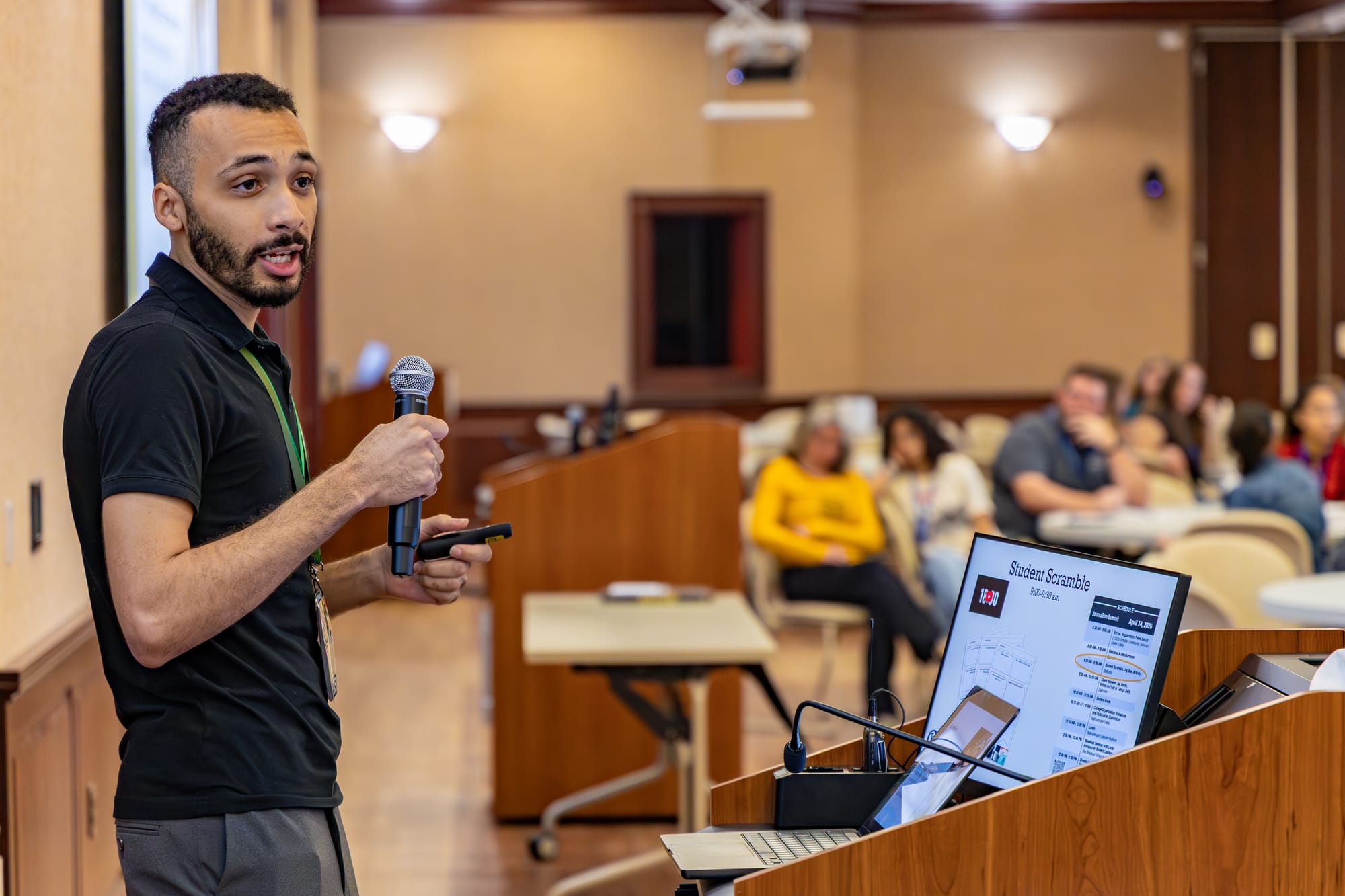
For our latest feature, we checked in with Jai Smith, founder of Lehigh Daily, a digital news site with a strong social media presence covering Lehigh Valley, Pennsylvania. Unhappy with the local news coverage in his community, Jai used his experience as a web developer to build the Lehigh Daily website. With a focus on social media reporting, each of his publication’s social media pages has amassed more than 30,000 followers and thousands of views. Now, Jai is celebrating the Lehigh Daily’s second birthday, reflecting on his growth and what he hopes to build in the future.
Be sure to read to the end, where he answers our *bonus question* about his advice to other news entrepreneurs.
1. What’s the origin story of Lehigh Daily and your reason for launching it?
I describe it as a passion project turned responsibility. About two years ago, I had a 1-year-old. I'm looking to buy a home and researching all these things you need to learn about your tax millage rates. I didn't know what was going on around me at all. I couldn't tell you who the mayor of my city was, or the mayors of neighboring cities.
It's a little bit embarrassing, but I found I definitely wasn't alone in that, and I wasn't super satisfied with my lack of knowledge. Being a web developer by trade and taking some of that passion, I decided to develop the website.
I built a site myself, I taught myself some YouTube University on journalism ethics, and how I can get started to make sure that we can be treated seriously. It was a passion project, and now I can't leave. Now it's my responsibility.
On the journey to educate myself and see what legacy publications were doing and how they weren't serving people, I thought I could offer something not necessarily better, but different, fresher and easier to consume. How people are consuming media these days compared to picking up a newspaper.
That really is the origin, and I'm still building on our mission, learning every day and figuring out how to serve our community better. I want to have a strong newsroom so that I can employ the best people in the area to do the work. I'm definitely not the best reporter in the world, and there are some things I'm learning. I consult Claude a lot to make sure I'm hitting AP style.
It’s definitely a learning process, but it’s pretty formulaic. Once you kind of figure out that formula and you know how to build a lead and a nut graph, it becomes a little bit easier.
2. This month marks your second birthday. Is there a particular moment when you feel you made an impact on your community with a story or an event?
Within the first six months of publication, there was a fire at Blue Mountain, a little farther north of Lehigh Valley. It was the largest wild brush fire in 25 years, and it was very close to my grandmother's house.
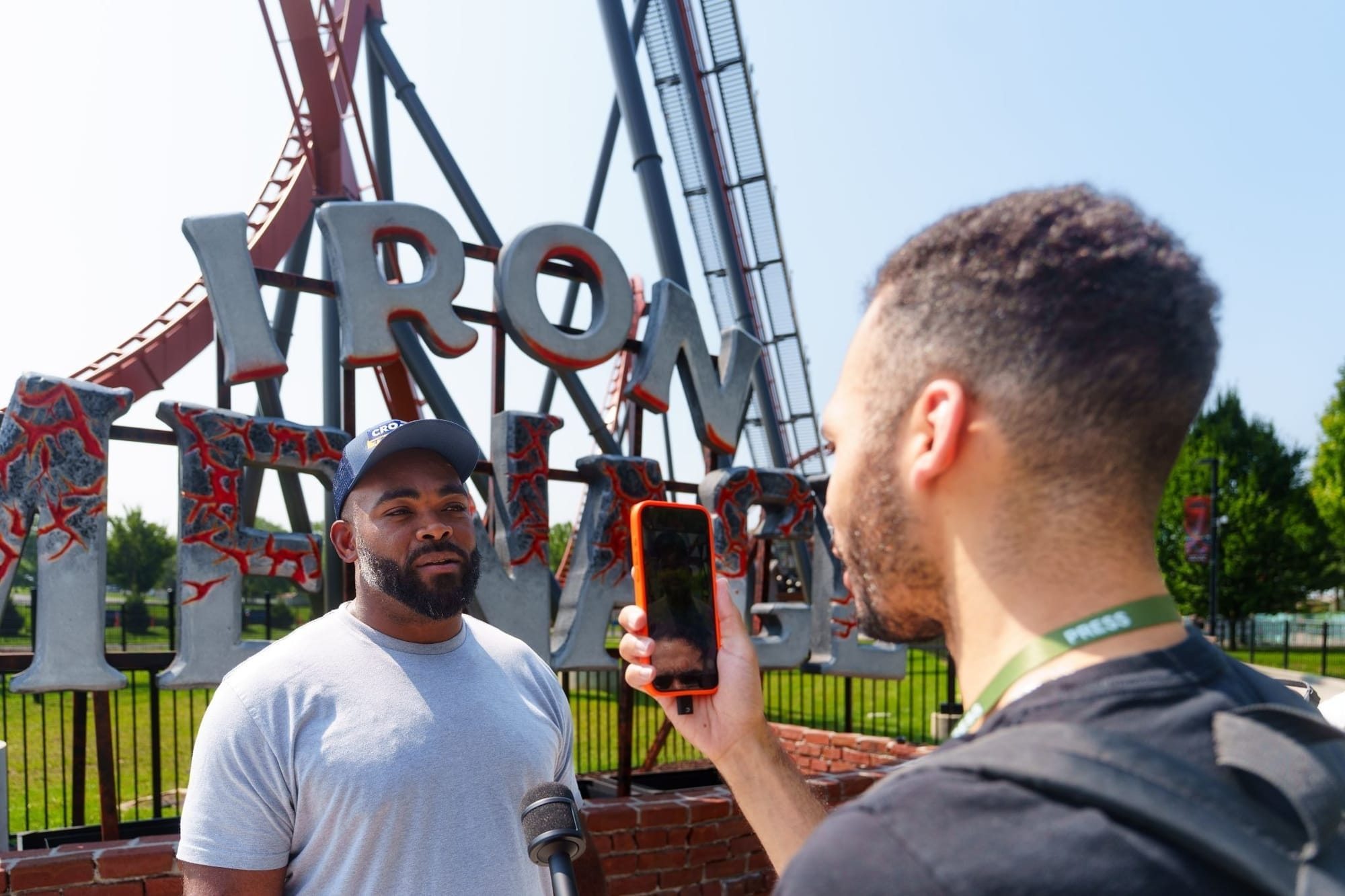
I drove over there in real time to see what's happening. I captured some of the big flames as the sun came down and was updating people about what was happening on the mountain on our TikTok.
Something that really reinforced the work that I'm doing and my usage of social media was when people were commenting, “How do I not know about this? I didn't see this on the news, nobody told me. I'm finding this out on TikTok. “
Then it was, “Am I safe? Do I have to run? What do I need to know?” People were finding out about this news in real time on TikTok and Instagram, before the news could package up a story, get back to the studio, and send somebody out to get the clips. I just had the raw thing on TikTok that said, "Hey, here's what's going on. Here's what you might want to know.”
That was really important for me to say: We can disseminate important information quickly, quicker than legacy outlets that have teams, and I'm just a guy with an iPhone.
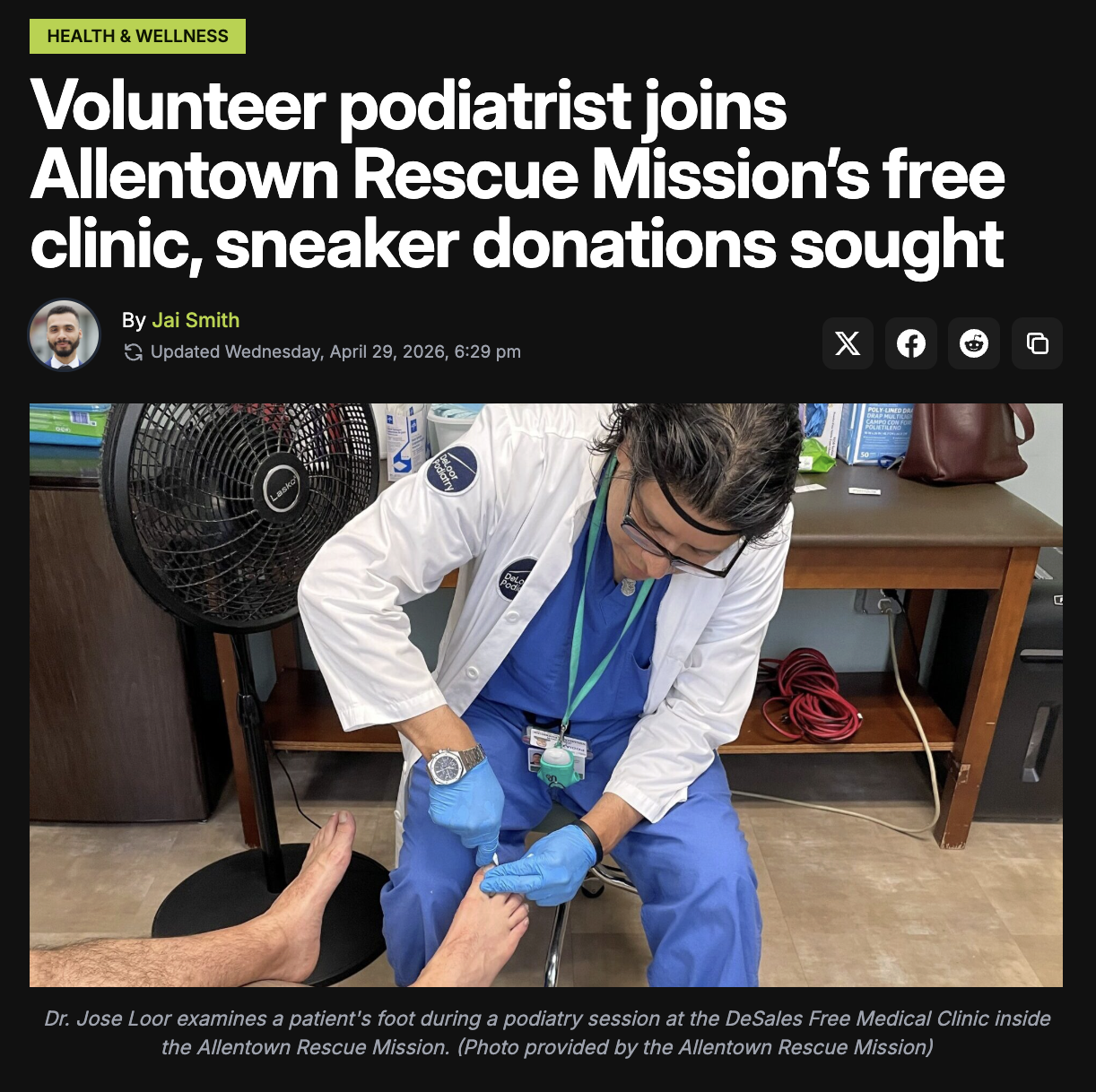
Recently, we've had smaller wins. For example, a local men's homeless shelter called The Allentown Rescue Mission has a new resident doctor come in to volunteer his time. He's a podiatrist, and I was interviewing the director of communications there for a story. At the end, she shared that the shelter was running short on shoes and asked me to mention that. I wrote the story and within 48 hours, Lexus of Allentown contacted them and said that they'd commit some sneakers to donate to the men.
Smaller wins are some of the pivotal things for me. I love to be able to surface something and then get an action done out of that. If we didn't write that story, that donation possibly would not have come through.
3. Your Instagram, Facebook and TikTok pages each have more than 30,000 subscribers. What’s your strategy for growing your social media presence while maintaining a steady publishing cadence on your website?
I'm truthfully still trying to figure out the best way. Some stories certainly do better in text format, and others do better when presented as an image or a video. The things that tend to do best on social media are entertainment. If there's a celebrity coming to the area, a new restaurant opening, or a tragedy or disaster. Being quick and being able to report on those in a short manner, in under a minute, usually does really well. It's a lot of those big videos that we get that bring in a huge chunk of the following.
There are stories you can't ignore. If there's something big happening in your city, or if there's a scandal, those might get the full package. You write a story about it, then I'll go on site and get some B-roll. Maybe somebody will send me some clips to use, and then that story will make it across every surface, social, the website. But truthfully, it's just picking and choosing.
The growth comes from intentionally choosing things that are inevitably going to be viewed, and the second large part of that is just understanding the algorithms and how people consume content. Not making things too long, making sure you're using transitions, making sure you've got a strong hook, so you can signal to the algorithm that this is worth watching.
It's a multi-part strategy, but I don't even have a written social strategy at this point. I kind of just have a couple of tips in my head that I fly by. If I see something breaking and can capture it, or I was on site to report it, I just edit it right inside TikTok, throw some captions on it and get it up.
What that usually does, too, is help us get traffic back to the site. We might interest you in this 32-second clip, but you don't get all the details. And that compels you to click through to the website or Google the same story and end up on our site.
4. Tell me about your business model, how you generate revenue, and how you plan to become sustainable in the long run.
The business model is a mix of reader support, sponsorships with local companies, and monetization on Facebook, which is interesting. I'm not sure many people know about or are taking advantage of that. We do have a mixed bag right now, but that is the business model — those three main things.
I am dedicated to not having a paywall and not having programmatic ads take over the site. I would rather have one person throw us a bone today or this week than spam all of our readers with ads. So the model this year switched to, let's work with local businesses, let's generate money on social media, and let's generate some reader revenue support.
They're not donations technically. It's not tax-deductible, and they don't get anything for it. It's not a subscription, it's not an account. I launched that in January. I guess we're maybe four months in now, generating close to $700. It's not a ton, but it's exciting because people are willing to throw us a bone for reading our stories, and that feels great, even if it's a small amount.
I’m really trying to work to grow that base of either large donors or community readers who throw us 10 bucks a month because they appreciate this as a service. Then we could get to sustaining one or two full-time people. Right now, we basically break even, with no full-time employees.
5. What’s your vision for Lehigh Daily this year and what it might become over time?
My main goals this year are to be able to break even and sustain one full-time hire. That would be a win for me as a very small newsroom, and it would mean one more full-time reporter in the area that we don't have right now. That way we are the Lehigh Daily — truly — and not the Lehigh “every once when we can.”
The “golden horizon” would be to become a next-gen, modern media company, where we have news — and we do great news — and we're serving our community. There are a lot of other ways people like to consume content, too, through podcasts, sports, food and entertainment. It would be great to have a local podcast where we talk about people in the community, community leaders and CEOs. It would be great to talk about new restaurants and have a feature series on them.
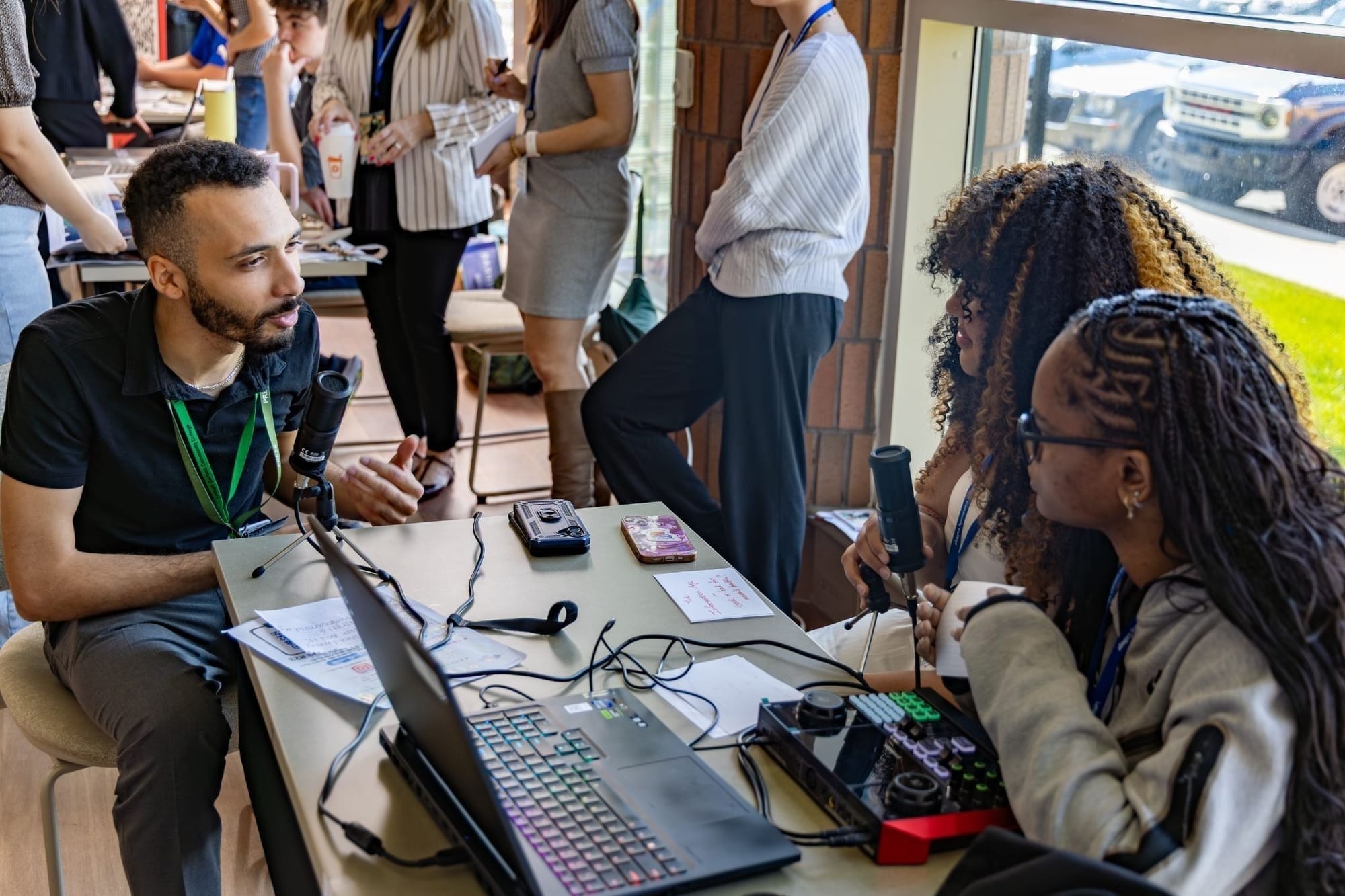
Bonus question: What is one piece of advice you would give other entrepreneurs working to launch their own news organization?
Doing this for two years, what would I say to somebody that wants to get into it?
I would say just educate yourself. Hit up that YouTube University, hit up that Reddit University, and just do a lot of absorbing of information. If you start from zero and don't have a media or tech background, you have a lot of learning to do. If you're dedicated to this, I think that your first thing to do is learn.
You just have to learn what's generally accepted and how a news organization operates. You don't have to follow everybody else's footsteps, but you should get an idea of how a serious news organization is shaped and run.
Make sure you're prepared, think things through before you execute, and don't be afraid to find a mentor or consult someone at an organization like Tiny News or Lenfest.
Educate yourself so that you can move with intent and know what you're doing, and not be flying by the seat of your pants as much as you possibly can. I'll be the pot calling the kettle black, because I am flying by the seat of my pants, but I do a lot of research and education before that.
Learn more about other TNC founders by reading these stories:
 TNC
TNC
 TNC
TNC
 TNC
TNC
 TNC
TNC
 TNC
TNC