
Tiny News Collective exists to support early-stage news entrepreneurs all across the United States who are raising their hands to provide community-focused news and information and places for community connection. We are who we are because of the founders we serve. And we want the journalism field, the civic information space and beyond to know about the creative, impactful work of these founders. To that end, we are thrilled to highlight their stories through an ongoing series of profiles and features.
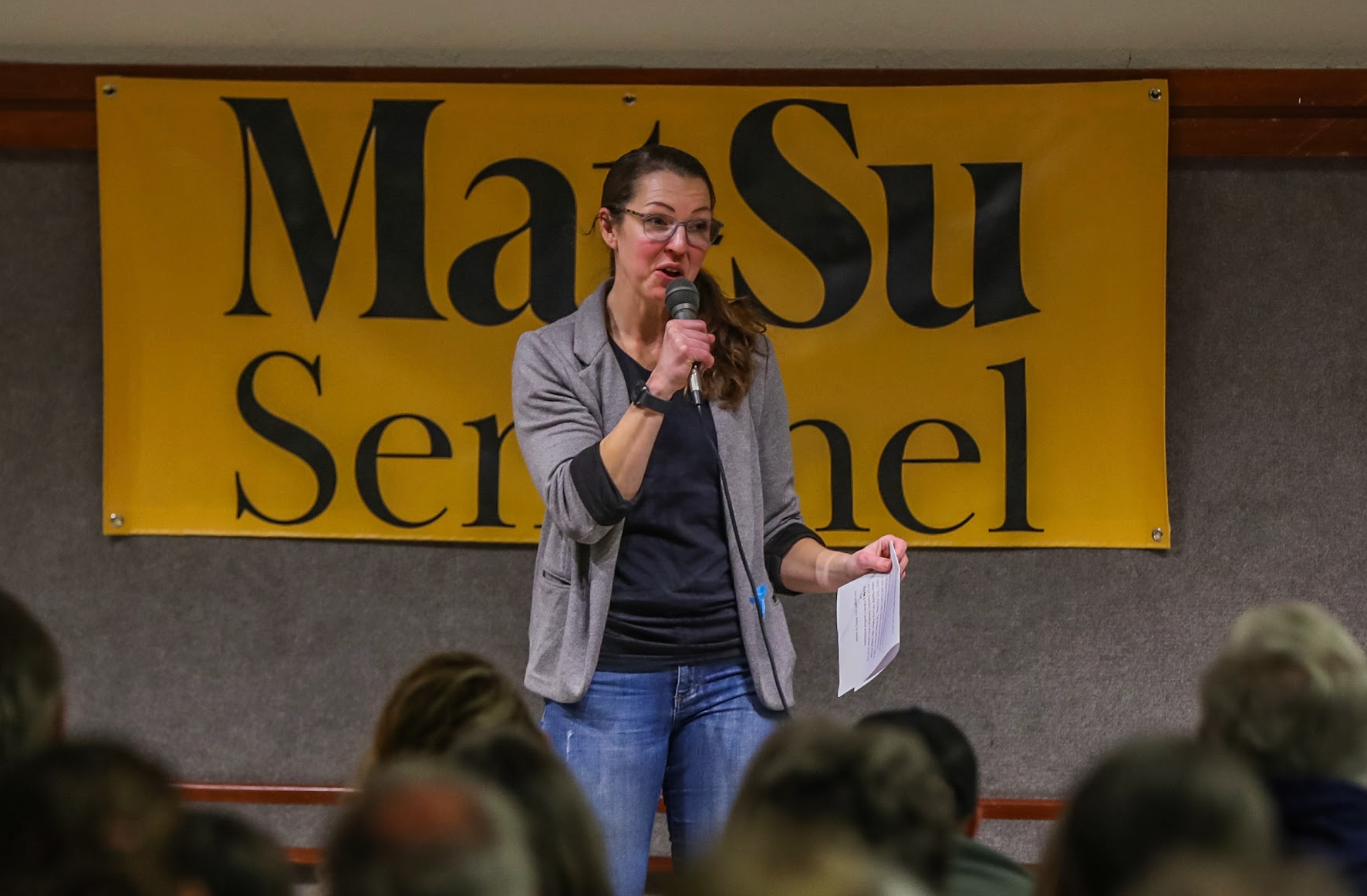
For our latest feature, we caught up with Amy Bushatz (pictured above), founder and editor of Mat-Su Sentinel, a nonprofit online news outlet covering the Matanuska-Susitna Borough in Alaska. Bushatz launched the Sentinel in June 2024, after spending time as a reporter for the Anchorage Daily News and executive editor of Military.com. The Sentinel has focused on accountability reporting while boosting civic engagement with voter guides and an innovative “Flip the Script” event with local candidates. Amy talked about how much support organizations such as Tiny News Collective and other consultants have helped her succeed, and said that this year’s Giving Tuesday fundraising campaign, as part of NewsMatch, was a rousing success, with more than $4,500 raised on that day alone.
1. What’s the origin story of Mat-Su Sentinel and how you came up with the idea to launch it?
I launched the Sentinel in June 2024, but I really started working on it about a year prior. I had been executive editor of Military.com for five years; I had been at the publication for almost 13 years. I loved covering the military — we're a military family — but I looked around my small town, increasingly, wondering where all the reporters were. Why didn't I know what was going on?
I was freelancing now and then for our local legacy newspaper. I realized that there is so much stuff that I could cover it all day every day, and I wouldn’t even scratch the surface of what’s going on here. I was writing a freelance story about the Mat-Su Assembly and realized that no one was watching what our elected officials were doing. No accountability at all. And I was just astonished. So I looked in the mirror and thought, “Instead of complaining about this, why don't I do something about it?”
 Amy Bushatz
Mat-Su Sentinel's first story focused on a book banning case in a school library.
I quit my job and started working on launching a local nonprofit newsroom. I had no idea what that meant, so I came up with a strategic plan to do this. I attended the Alaska Press Club conference. I talked to some folks about news coverage in this region. I was the only person at the conference from this region. The Anchorage Daily News offered me a part-time job writing, being a beat reporter for this area, which is about an hour outside of Anchorage, but it's a very different area, not a suburb. I used that job as an onramp to launch the Sentinel.
I started subscribing to every newsletter I could find in the field and that’s how I found out about Tiny News Collective. I was floundering, and didn’t have the first steps to launching a newsroom. I was paralyzed by options and I needed someone to tell me what to do, and I found Tiny News and said, “Wow, this was made for me!” And I applied for CUNY’s Entrepreneurial Journalism Creators Program and was accepted.
When I was at the Institute for Nonprofit News conference that summer, there was breaking news on something I had been following for the Anchorage Daily News and had been waiting for answers for months. I could not abide the idea that it would go unreported so I reported it for the Mat-Su Sentinel and that was our first story. And that's the day we launched, two months before I intended.
2. Was there a moment when you realized that your work was making a difference in your community?
One of the first things I wanted to do more than anything else was cover the election here.
We have local elections with two different election dates, October and November, depending on the government in question. And I wanted to be able to provide voter guides, because that was not a resource we had here. And so I was able to do that with funding through Democracy Day, and a couple of other sources. I produced voter guides for Mat-Su, which was really the first time they had ever been done, as far as I know, and certainly the first time they were digital.

And I had full participation from every assembly candidate, and strong participation from all the cities’ candidates. So I was able to provide this resource to the local folks and make a real difference. And I think that people saw that I was serious about providing a nonpartisan source of news, that I was willing to let candidates submit answers to questions fielded from local community members.
I put out a survey and let people submit questions and topics. And then I took those and crafted them into what went into the voter guide, because while I cover these governments, I don't live in all of the places. This area is the size of West Virginia, so I'm not going to pretend to be an expert in all of the issues facing somebody 40 miles from me. It did make a difference, and we've now done that two years in a row. The feedback I hear on that is that it's valued and useful.
3. You talked about getting grants. How is that a part of your business model and plan to become sustainable?
The big goal in the world of nonprofit news is that it’s self-sustaining, that you don't have to be primarily funded by grants, that you're not scraping together couch cushion money every day to fund your operations, that you have a sustainable source of income that you can plan against.
I was sort of chuckling to myself last night about my budget for 2026 because it has a lot of hopes and dreams built into it.
An ideal mix of revenue includes grants, which are always going to be a part of that. It would be great to see that bring in 30% of revenues, because if you are relying on grants for 30% of your income, and a portion of that is missing, it's not catastrophic. You can make some cuts, you can change some things around. So I'd really like to see the percentage of grants shrink to that. That's not where we're at right now, but we’re moving toward that.

At this point, we have about 165 recurring donors, and some regular one-time donors. We’re doing NewsMatch and raised $4,500 on Giving Tuesday alone. I am on all these mentorship calls and trainings, and have missed only two or three of the ones TNC offers. I take these resources very seriously. And then I just do what I’m told. If an expert says I should send more than one email pitch on Giving Tuesday, then I am running more than one email. I currently have someone volunteering for us who miraculously lives in my town and has a background in nonprofit news and small donor management.
She asked if she could volunteer for me, and I called her back within four minutes. She took over NewsMatch, writing the emails and I am editing them and scheduling them to go out. We sent three separate emails during Giving Tuesday, and it was very successful. So our business model is a mix of one-time and recurring donors, and then grants. And we also do syndication, and run events that I ticket, and sell corporate sponsorships. We also just started taking advertising on our website.
4. What have you learned about civic engagement now that you've done these voter guides a couple times and did the recent Flip the Script event?

People want to be engaged. They want a chance to connect with other people in a setting that is designed to be neutral. They don't want to come in loaded and armed against other folks. They want to trust that there's a place where they can be fully themselves, whatever that means across the political spectrum, without expecting to be under attack. So when it comes to civic engagement, it's really difficult in our day and age, because we are primed to be ready for an attack at all times, based on social media and the polarizing media that we have.
Locally, we're not dealing with major immigration challenges. We're not dealing with these sort of national angst issues. We're dealing with things like taxes and road fixes and the cost of living. People require a promise of neutrality so the space is going to have that, and they don’t want to be told what to think or what to do, but rather just be presented information in a way that is clear and easy to understand and doesn't have that spin.
I promise to do my utmost to present the facts that I've learned through my news reporting in a way that people can make their own decision. I read a Poynter article about a “reverse town hall” and that sounded interesting because typical election events are very boring. There is certainly a time and place for that, and this year we hosted a typical candidate forum.
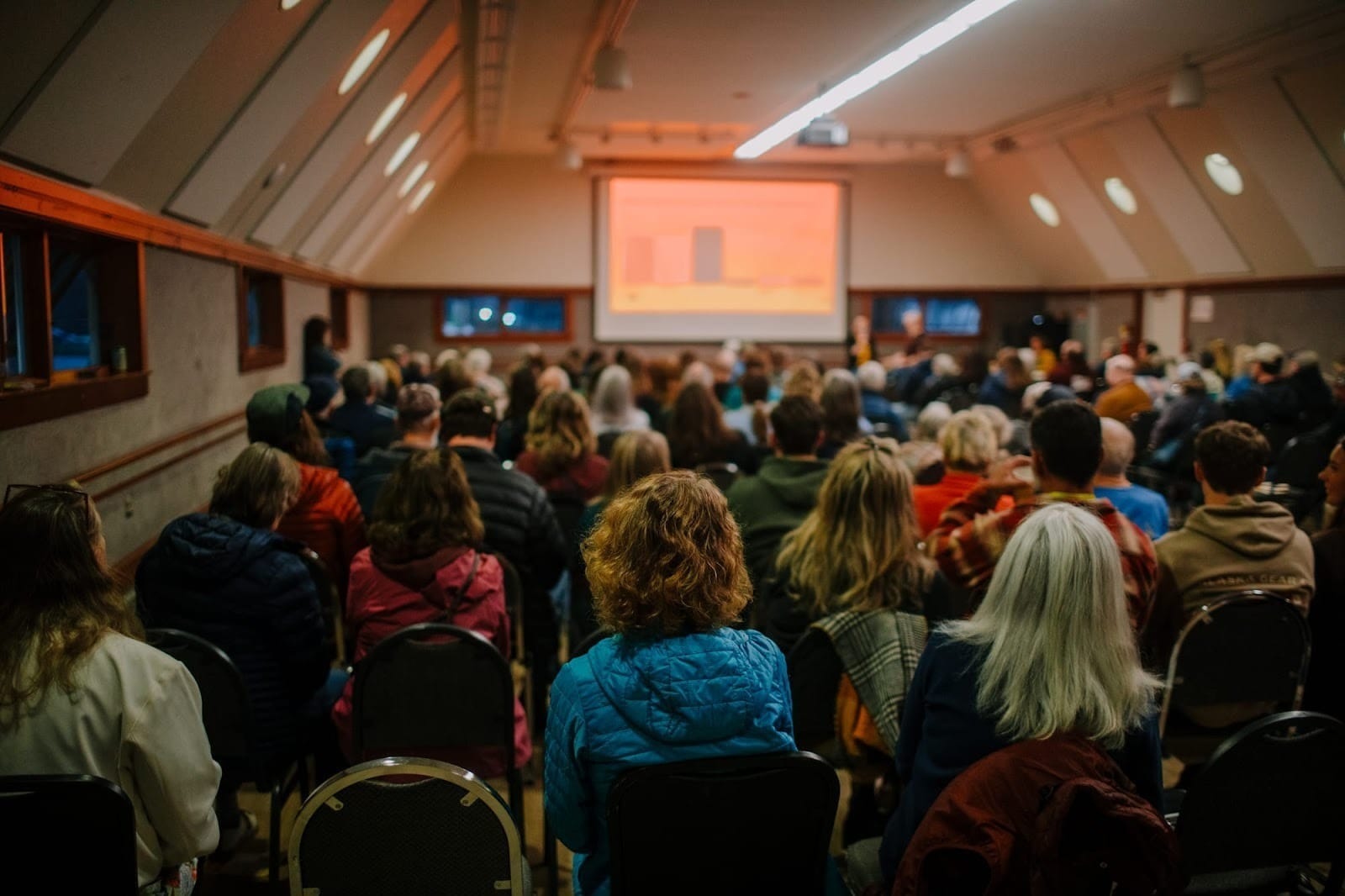
But the reverse town hall is really just listening, with the candidates just listening to the people. I wanted a hybrid version because people don’t really know the candidates here. I let the candidates introduce themselves, and then did interactive polling of the audience, and gave the candidates another chance to speak. That’s the model we came up with.
5. What’s your vision of what Mat-Su Sentinel might become in 2026 and beyond?
I would love to have a small staff of reporters and editors. We have three city governments, and the borough/school board and on and on. One person cannot faithfully tackle this entire thing. Right now, it’s just me and a couple freelance contributors. We need a staff of five reporters and editors, so that we have some redundancies in case someone gets sick or goes on vacation.
I would also love to have someone on staff whose job is donor management, grants, ad sales and caretaking of the monster that is QuickBooks. I apply for grants all the time to seed that. I think about how that person could help us bring in more income, so we can provide more content and then have readers give us more money.
Our mission is civic education and engagement so people understand what’s going on and are empowered to vote based on information they have about what’s on the ballot. I want them to lead happier, healthier lives because they are connected to each other and are civically engaged and don’t have an “us vs. them” mindset about every single thing. It’s much easier to like your neighbor when you don’t think they have a constant plot against your health and well-being!
 TNC
TNC
 TNC
TNC
 TNC
TNC
 TNC
TNC
 TNC
TNC
 TNC
TNC
 TNC
TNC
 TNC
TNC
 TNC
TNC
 TNC
TNC
 TNC
TNC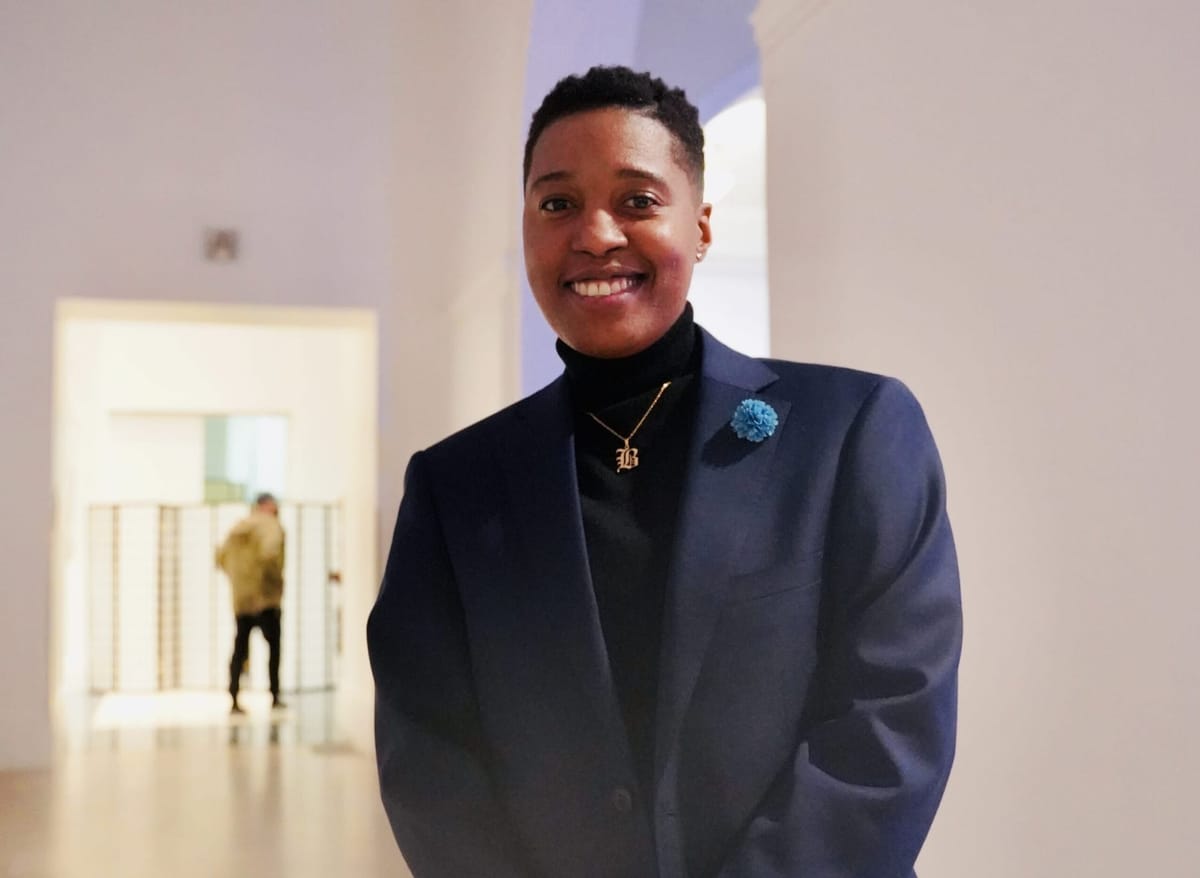
 TNC
TNC
 TNC
TNC
 TNC
TNC
 TNC
TNC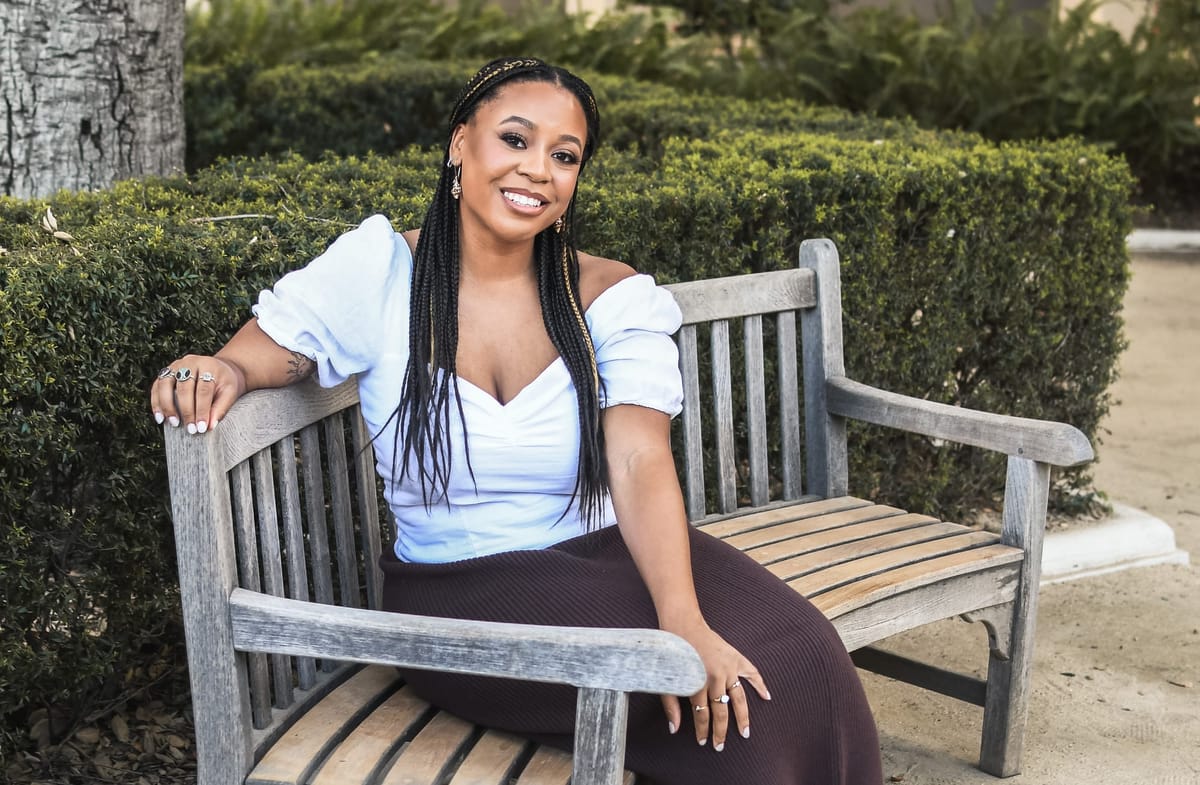 TNC
TNC
 TNC
TNC
Sign up for our monthly newsletter for ongoing updates, announcements, and resources for newsroom entrepreneurs.