

Helping news entrepreneurs and their communities flourish everywhere
By Elaine Díaz Rodríguez
Across Tiny News Collective, newsroom leaders are navigating a moment where the line between reporting the news and living it is steadily disappearing. A Venezuelan journalist in exile is trying to explain to their audience in Atlanta what are the long-term consequences of the recent capture of Nicolas Maduro while carrying the weight of uncertainty herself. In Minnesota, Eden Prairie Local News, The Roseville Reader and Woodbury News Net, among others, are covering ICE raids and shootings, as well as the presence of federal agents while navigating the fear and disruption those actions create for their own neighbors, families and sources. La Conner Community News in Washington state recently covered the unprecedented flooding in the area and the long road to recovery.
These newsroom leaders cannot afford the luxury of turning the news off when it hurts too much.
Many of the founders we work with are journalists whose identities and lived experiences shape their work every day. They are expected to lead organizations, protect their teams and serve their communities while carrying fear, grief, anger and uncertainty in real time. We often describe these leaders as “resilient,” but the word has become so broad that it risks meaning very little. So we’ve been slowing down to ask a more precise and necessary question: What does resilience look like in practice for early-stage, community-rooted newsroom leaders? And how can that knowledge be built collectively, shared intentionally and passed on before a crisis hits?
As part of this listening, we’ve been paying close attention to how founders describe resilience in their own words. One example comes from a recent conversation with Amy Bushatz, founder of Mat-Su Sentinel. For Amy, resilience is the ability to navigate uncertainty with agency in environments where so much is out of your control. It looks like asking for help a week before a grant deadline instead of the night before. Naming what you don’t know rather than faking expertise. Actively hunting for support instead of waiting for it to appear. Over time, those choices add tools to your toolbox — Amy calls them her Mousekatools (who knew that Disney Junior would have relevance in journalism?). As the tools accumulate, you’re more prepared to use them creatively when the stakes are high.
We’re also getting clearer about what resilience is not. It’s not acting like nothing is happening. It’s not faking strength or pretending you’re unaffected. It’s not downplaying fear, grief or anger, and it’s not letting uncertainty take you by surprise. It’s also not disguising reckless action as bravery, or working unsustainable hours that burn you and your team out.
With everything happening right now, these skills feel more essential than ever. In the coming months, we’ll share more about how this learning is shaping our recently launched Response & Resilience program. What we’re doing now is listening deeply through structured intake conversations, so founders don’t have to explain their risks for the first time in the middle of a crisis. We’re also building a case-management infrastructure to safely assess and triage legal, digital safety and well-being needs. We’ll curate and test real tools founders can use right away. That includes piloting services like DeleteMe to reduce digital exposure and doxxing risk and mapping a trusted ecosystem of legal, safety and mental health support, so help is easier to find when it’s needed most.
We’re grateful to be doing this work with (not for) TNC’s newsroom leaders. We don’t have all the answers, but we’ll keep thinking together about how we support leaders to carry this work without breaking.
Tiny News around town: Our executive director Amy L. Kovac-Ashley and membership director Elaine Díaz Rodríguez will be at the Knight Media Forum in Miami February 10-13. They'd love to meet with folks who are interested in learning more about Tiny News Collective. Reach out to Amy to schedule a time.
ICYMI: Amy wrote two pieces about our work at Tiny News Collective: Local news learns to love the arts again for Nieman Lab and Looking forward: Converting cynicism into solutions for Press Forward's Local News 2035 project.
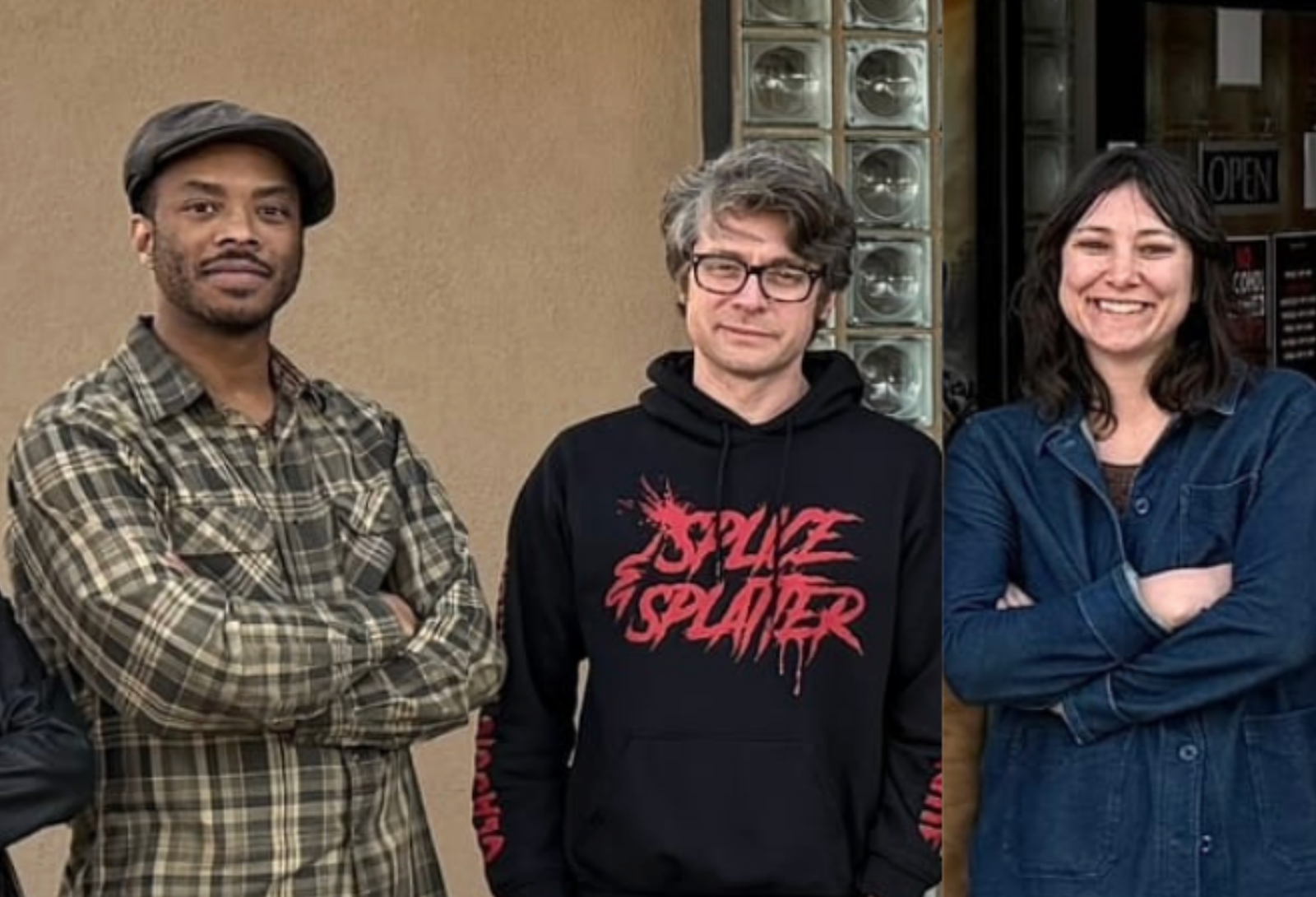
For our latest “5 Questions with” feature, we checked in with Katy Gross, Warren Langford and Jerome Morrison of 505omatic. An independent collective of journalists, 505omatic works to bring engaging and accessible coverage to Santa Fe, New Mexico, and just celebrated its first birthday. Launched after the 2024 election, 505omatic publishes news stories via social media, where some of their videos have gone viral for their informative but slightly comedic nature. Katy, Warren and Jerome discussed their community-rooted engagement strategy, the importance of in-person events and their goals for 2026.
“Community-powered, community supported,” Gross said. “Those are our goals, not to be reliant on the wealthiest people to fund us.”
Read the whole feature here.
We are thrilled to share that the Patrick J. McGovern Foundation has renewed its support for Tiny News Collective with a $400,000 grant to continue and expand our Tiny Vitals metrics and data literacy work. This renewed investment builds on the strong foundation laid in the first phases of the program and reflects a shared belief that small, early-stage newsrooms deserve tools that are right-sized, ethical and genuinely useful for their stage of growth.
Three cohorts of Tiny News members have deepened their knowledge and understanding of their audience, revenue and impact data in this program. That has helped them begin to create audience funnels that integrate information including newsletter signups and live event participation. Others are now using audience data to test new product ideas and content strategy.
Learn more about the grant and new additions to Tiny Vitals here.

TNC is thrilled to welcome our first-ever response and resilience program manager, Massarah Mikati, to our team. She will focus on supporting members with the specific risks they face as news founders of community-rooted outlets. The new program will offer concrete help with digital security, legal questions, mental health and operational stability.
Massarah brings her varied experience as a journalist, consultant and trainer dedicated to helping newsrooms implement more inclusive, culturally competent and community-centered engagement journalism at an institutional level. She currently works at OpenNews as part-time community manager, and has had previous roles at Vox and Hearken.
Learn more about Massarah and the work she'll be doing here.

Tiny News Collective is proud to announce a new round of Immediate Needs Fund grants to support member newsrooms navigating urgent operational and community challenges. Each of the newly selected outlets will receive $5,000, for a total of $100,000, continuing the fund’s mission to provide rapid, targeted support that helps small and emerging news organizations stay resilient amid shifting economic, political and audience pressures. The fund is supported by the John D. and Catherine T. MacArthur Foundation.
As with the last round of grants, a team of media professionals served as grant reviewers, scoring applications based on a rubric we identified at the outset. The criteria included the urgency of the request and the connection of the request to meeting a community or organizational need. Along with our earlier Spark Fund and Immediate Needs Fund grants, Tiny News Collective regranted $200,000 to members in 2025.
Learn more about which TNC newsrooms received Immediate Needs grants here.
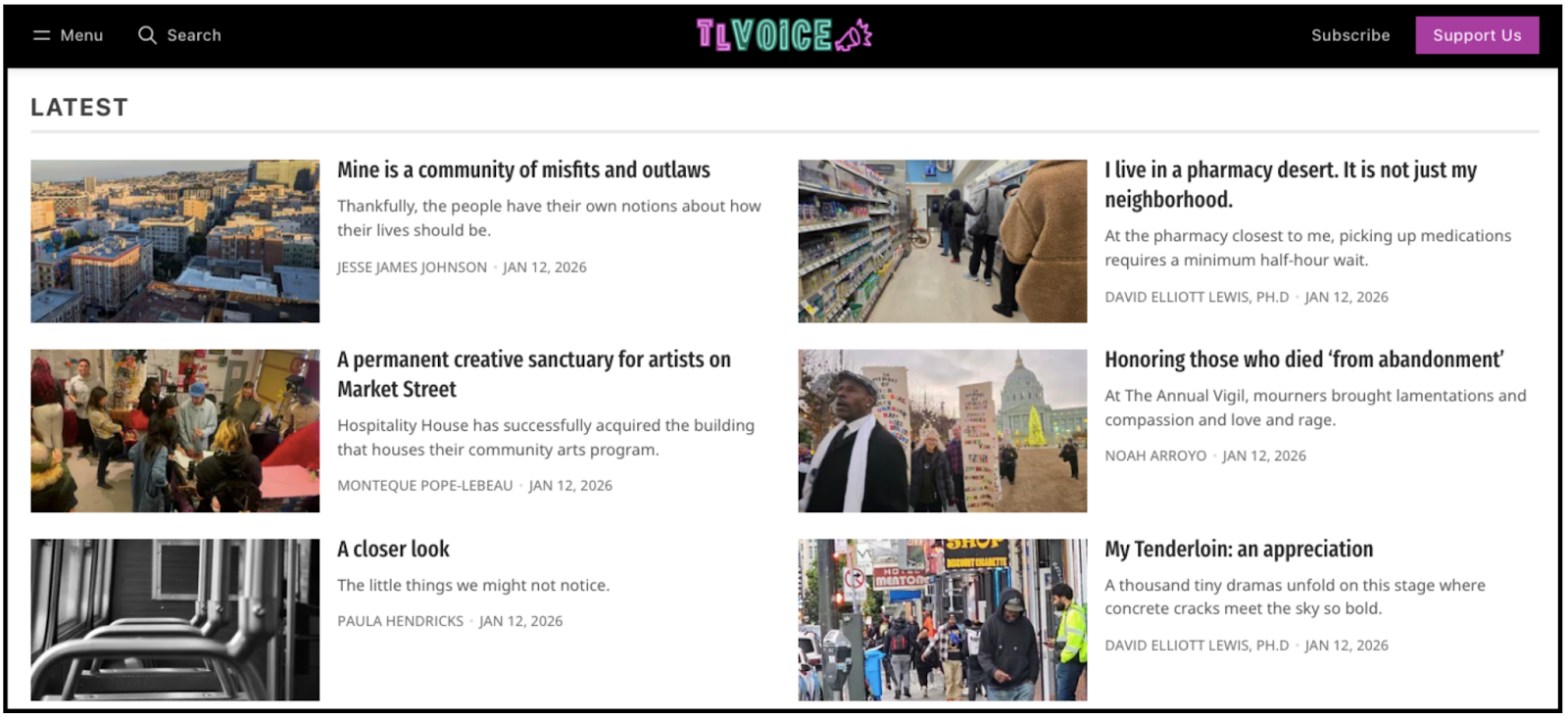
We love to see new launches and big moments among our members, including the following:
🚀 News Relay Network launched the Tenderloin Voice (see screen shot above), covering that neighborhood in San Francisco. A print zine is coming soon!
🗞️ La Conner Community News bought The Northern Light newspaper in Washington state’s Whatcom County, saving it at the last minute from closure. Read all about it in the Seattle Times.
☑️ Investigate LA is doing a community needs survey for folks in the San Gabriel Valley, to understand where they get their news and what topics are of interest.
🏦 The 51st has received a loan from the DC Solidarity Economy Loan Fund, a branch of Seed Commons, a cooperatively governed national community development fund and nonprofit financial organization. With this funding, they are able to bring on two more full-time staff members.
🚀 Crosswinds News released its Native-Focused Tulsa County Information Ecosystem Assessment, a year-long effort grounded in listening, community dialogue and data-informed insights.
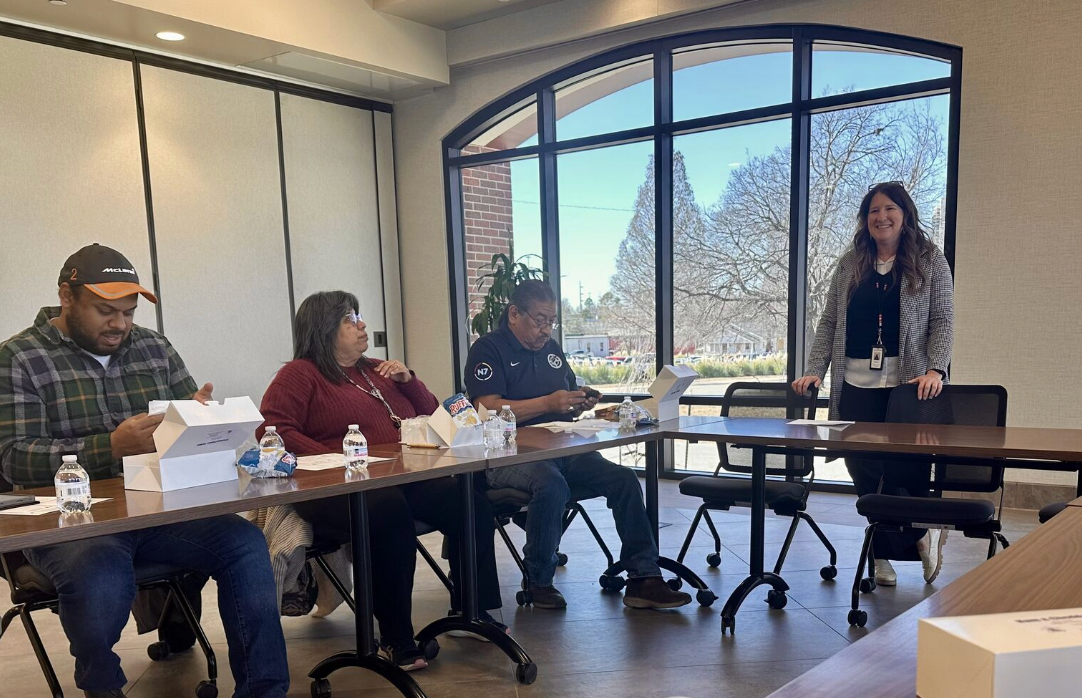
We love seeing our TNC founders out in the real world, giving talks, sharing knowledge and getting profiled. Here are some highlights:
🪶 Brittany Harlow of Crosswinds News spoke to the Native American Community Committee and the Indian Health Care Resource Center of Tulsa earlier this month (pictured above).
🎭 The SHOUT was profiled in a story on RJI Online. Fun fact: When The SHOUT launched in April 2024, co-founder Teri Mott was onstage playing Frȁulein Schneider in the musical “Cabaret.”
🥊Autonomy News was featured in a Guardian article, “How independent journalism is a form of resistance.” The piece referenced the outlet’s collaboration with Mother Jones on a story about claims related to an abortion pill “reversal.”
🌇Cara Kuhlman of Future Tides wrote a piece for RJI Online about Untapped New York’s tours, and how they offer a more “lightweight operation” than more complex events. She also announced a partnership with HeyWire AI to capture port and transit governance data statewide in Washington.

🥶Jillian Melero of Connect Puerto Rico braved -50 wind chill weather (see photo above) in Chicago to talk to students at Medill Journalism School who will visit Puerto Rico in February for the Medill Explores program. Temperatures there will be more like 100 degrees!
🌟Claudia Amaro of Planeta Venus wrote a profile of Enlace Latino NC for RJI Online and how they tell stories that others miss. “While [national outlets] come only when there is an emergency and then leave, we always stay because here there are family separations and fear every day,” Enlace’s Paola Jaramillo said.
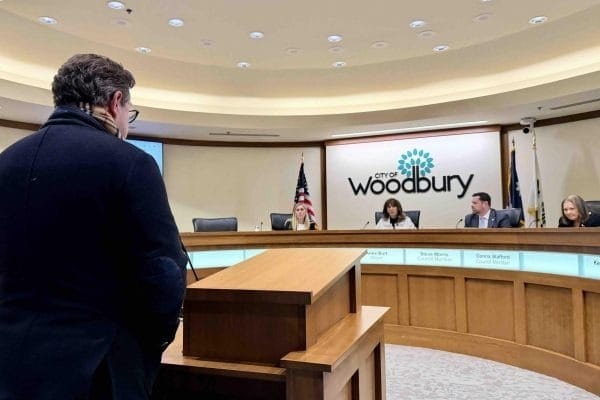
🏛️Woodbury News Net covered a recent City Council meeting discussing ICE activity in the Minnesota town, and a potential location for an ICE detention center (denied by the mayor). “The council chamber filled quickly, with residents lining hallways to watch on mounted televisions,” Theo Franz wrote. “An overflow room downstairs met capacity with more gathered outside.”
🇬🇱Climate, Gendered interviewed Tillie Martinussen, a Greenland member of Parliament, about the U.S. push to take over the territory and the effect it might have on women’s rights. “Paid maternity leave, gone. Free abortion, gone. Free birth control, medicine, etc., gone. Safety on the streets for women ... also gone,” she said.
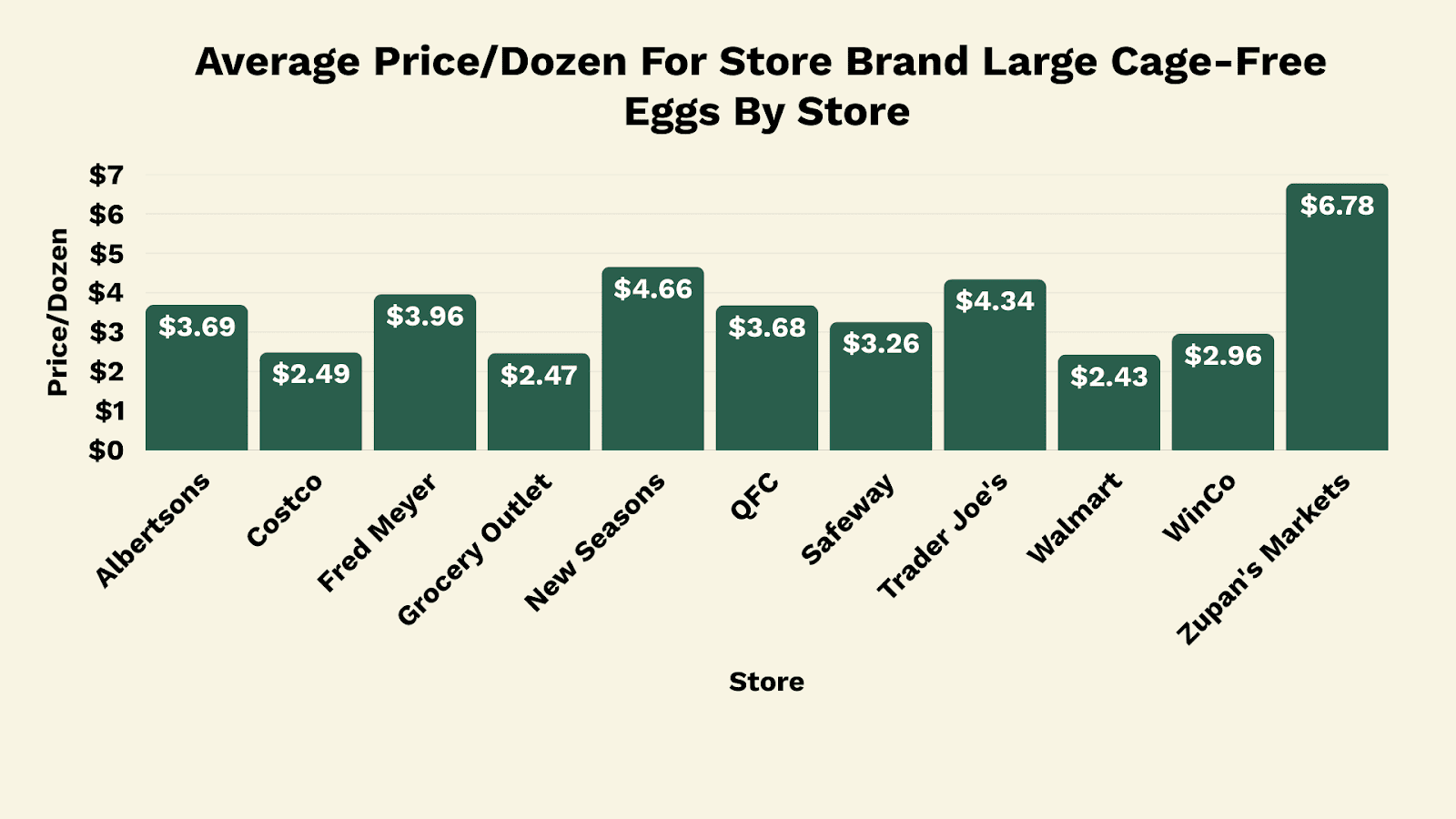
🥚 Stumptown Savings’ Bryan Vance wrote an in-depth report on egg price variations in Portland, Oregon, and found that there was a "ZIP code penalty" of 26%, and an "organic tax" that punishes healthy choices at budget stores.
🔎 The Parlor ran its first story from a fellow, Jenna Stanco, an investigative dispatch on the surveillance apparatus used to quell dissent as well as power immigration detention and deportation across the U.S.
🐺 COYOTE Media’s Cecilia Lei writes an ode to an Asian market in the Bay Area, Pacific East Mall, that came before the recent “Asian market boom.” “[The mall] reflects how immigrant communities actually exist. The mall feels a tad disjointed because that is the Asian American experience,” she wrote.
🚲 Lo Sontag was on the Sprawlism podcast, “Auto Asphyxiation,” discussing how what’s often sold as “bike safety” is really a “doctrinal system that normalizes risk, individualizes responsibility and treats injury as an acceptable cost of participation.”
RJI Professional Innovation Fellowship
RJI offers non-residential fellowships with a $75,000 stipend, and the focus is to create a resource, tool or project that will help advance the journalism field and will be open-source. There’s also an emerging technology fellowship with a $100,000 stipend. Apply by February 6.
Community Journalism Fellowship from Altavoz Lab
Altavoz Lab has opened applications for its Community Journalist Fellowship. This seven-month long program launches in April 2026 and brings together a tight-knit cohort of reporters working at the heart of their communities. Fellows will receive up to $8,000 to produce an in-depth reporting project or series, and host newsrooms will receive up to $3,000 in additional funds to deepen and expand their audience engagement. Apply by February 16.
Playbook Grants from Listening Post Collective
In 2026, LPC will fund five new Listen projects as they shift their focus to help existing grantees through Seed and Cultivate. Applications open February 1, and there will be a new interview step with potential applicants to get to know projects more deeply. This cycle will focus on Southwest Border, Indigenous/Tribal communities and the Rural Midwest. Join LPC for an info session on February 9 at 1 p.m. ET to learn more.
Thanks for reading the latest edition of the Big Blast from Tiny News. Be sure to follow us on social media to keep up with the latest from TNC and our amazing group of founders!
Follow us on LinkedIn: https://www.linkedin.com/company/tiny-news-collective/Follow us on BlueSky: https://bsky.app/profile/tinynewscollective.bsky.social
The Big Blast Credits
Written by Amy L. Kovac-Ashley, with Mark Glaser
Edited by Amy L. Kovac-Ashley
Sign up for our monthly newsletter for ongoing updates, announcements, and resources for newsroom entrepreneurs.