
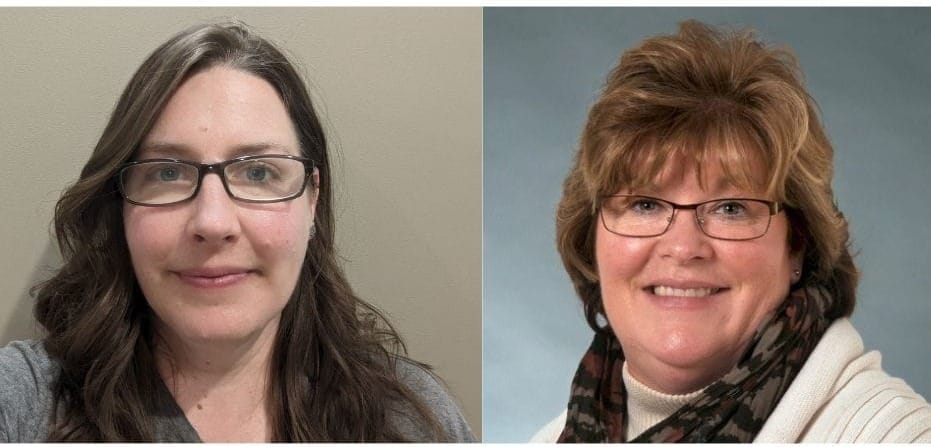
Tiny News Collective exists to support early-stage news entrepreneurs all across the United States who are raising their hands to provide community-focused news and information and places for community connection. We are who we are because of the founders we serve. And we want the journalism field, the civic information space and beyond to know about the creative, impactful work of these founders. To that end, we are thrilled to highlight their stories through an ongoing series of profiles and features.
For our latest feature, we checked in with Sarah Leach and Sheila Reinecke of Ottawa News Network (ONN). Launched in December 2024, ONN serves the people of Ottawa County, Michigan, with free, community-rooted news. The outlet was inspired by Sarah’s independent local reporting on political controversy in the county and her fierce belief that community members deserve to know what’s going on in their government. From those original political stories, Sarah, Sheila and the team have been able to build a new organization built on trust with their community.
Sarah: Ottawa News Network wouldn’t be here today if it were not for two events: 1) political upheaval that rocked Ottawa County in the immediate years after the COVID-19 pandemic and 2) losing my job as an editor at Gannett.
In the first case, a far-right political group took over our county-level government in 2023 and made a lot of controversial decisions that threw us into chaos — with lawsuits, negative national news coverage, etc. As a local journalist, I reported the heck out of those stories — from the formation of the group to all of the actions (and reactions) that followed.
But then in April 2024, Gannett fired me. They said I had shared proprietary information outside the company. In reality, I had discussed my frustrations with a Poynter reporter that Gannett’s assurances to the public and its shareholders that it was hiring journalists for its smaller publications were untrue. I managed 26 newspapers across four states in the company’s community news division, and none had adequate reporting staff — five of them were “ghost newsrooms.”
My first instinct was to keep reporting independently on the extremely volatile time in our community. I started to publish stories on Substack, which got the attention of people like Sheila who were concerned citizens. They saw the need for more local reporting, more comprehensive coverage, and we began to organize what would become the Ottawa News Network. During our planning phase, I continued to publish my reporting on Substack. I later donated my archives to the ONN site, which launched in December of 2024 — less than a year from when I conceived of the idea.
Sheila: In July 2024, about 20 people with backgrounds in media, nonprofit organizations and business from Ottawa County met and discussed the importance of continuing to report on the community.
Sarah was doing a great job on Substack, but we also wanted to get this information to a wider audience. We did a lot of research on developing a non-profit news model. I had worked for major news companies, including The Muskegon Chronicle and MLive, for more than 35 years and never realized how many local, small news organizations were now producing content around the country, due to the lack of coverage from mainstream media. Many of these small news organizations are joining groups like TNC and LION to get the support they need to build their own media organization to fill the gaps in reporting.
What Sarah is doing — and what our Board of Directors feel is important to our community — is that we report what is happening and let readers form their own opinions from that.
It is very important to our Board of Directors and our editorial team that we do not have a paywall. Our website is free for anyone who wants to subscribe; we're very proud of that fact. We want to make sure that everyone has access to the news regardless of ability to pay.
Sarah: In my transition from legacy media into the independent space and then into the nonprofit space, I still had relationships with people that I worked with before, because it's a fairly small community. The trust I built as a local reporter and editor has contributed to the impact of my stories.
A lot of people inside the local government were whistleblowers sharing sensitive information, but they knew it needed to get out there and didn't have any other vehicle to do it.
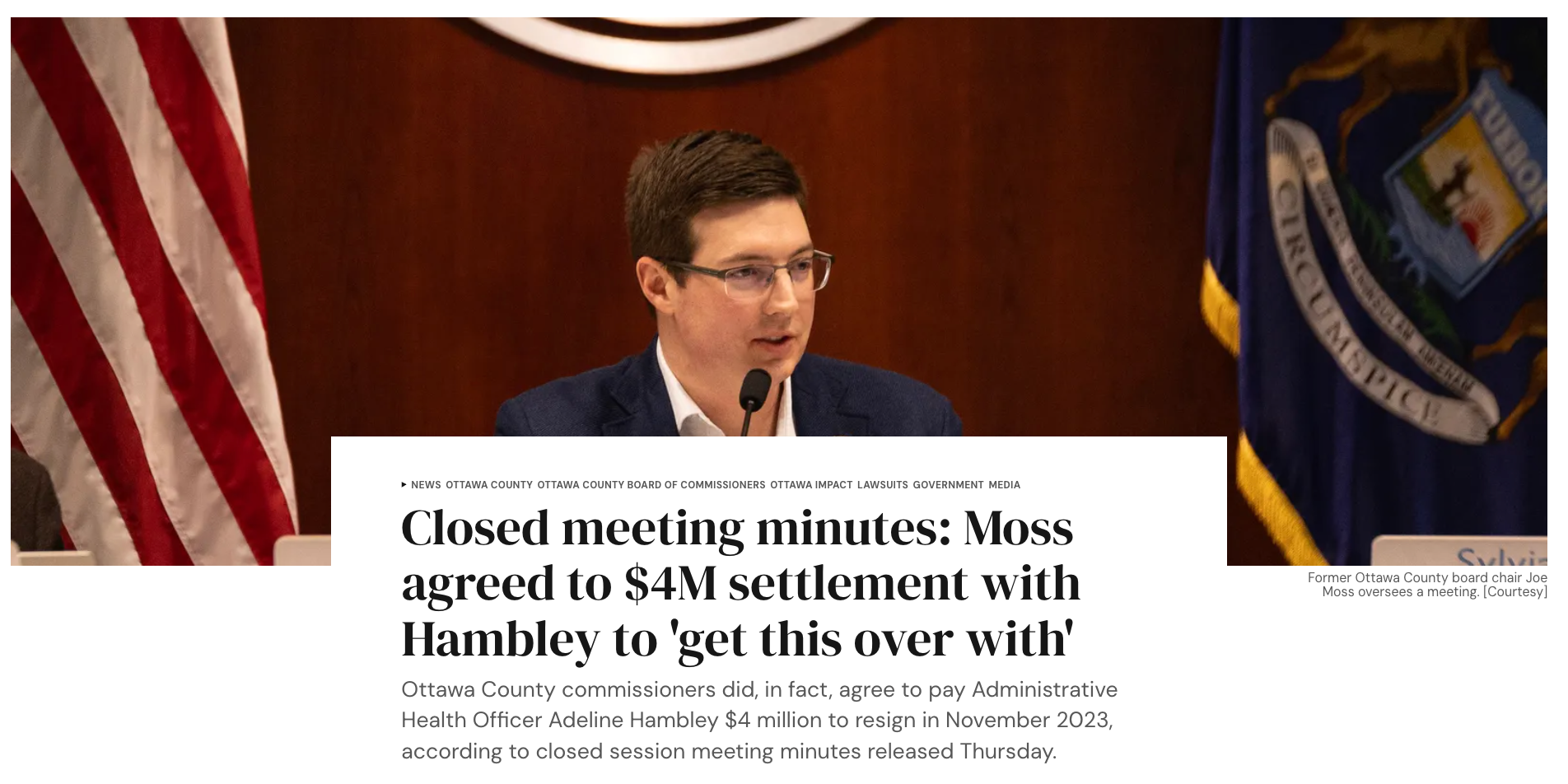
There was one occasion where I reported on the secret details of one of the lawsuits. It was a $4 million settlement deal with the local health department officer that the county board was attempting to fire. During the vote to approve it, they did not disclose the amount or any details.
The next day, I found a copy of the agreement in my home mailbox at the end of my driveway. (Those kinds of things really happened!) So I broke the story. Everyone else followed suit, and it played out. Honestly, it blew up the deal.
It rattled the local government at the time that they are not as smart as they think they are. That was a pivotal moment when everybody sort of knew that I was a safe person to talk to — that they could trust me and that I would work with sources to get information out to readers, because that is the most important thing.
Sheila: After Sarah published the story about the $4 million settlement, the county commission denied that the agreement ever happened. Months later, we had the opportunity to see the records — those meeting records were then unsealed — and it was demonstrated that Sarah’s reporting was accurate.
That's a pivotal moment in saying, you know what, we got to hold their feet to the fire, and they have to become accountable to the county and residents.
Sarah: Working in the local community paper space for the majority of my career, you get really creative with working on a shoestring budget. We have developed a free internship program with the local university that has a journalism program. That has proven to be very successful; it gives them on-the-job training, and it gives us content.
My experience in the community has allowed me to leverage former contacts to contribute to ONN. For example, I hired a freelancer from my last job to work on our calendar product. I know the value of the calendar to our community, and I already knew this skilled person who could do it for us.
You just have to recognize those opportunities. We don't have a whole lot of money, but it's not necessarily about the money. It's about the mission.
We're going to our donors to say, this is really important work that needs to be supported. People understand that, I think, far better than they do with more traditional media business models — with subscriptions and paywalls, and all this other stuff. I think this is much more true to what the real relationship was always intended to be with the audience.
Sheila: Currently, all of our revenue comes from donations and grants. We were fiscally sponsored by TNC when we launched our website in December 2024. Since then we received our 501(c)(3) and are able to receive donations directly.
I came from the business side of a newspaper, so fundraising was not my forte. We've received three or four grants so far. Grant writing is a new part of what we're doing as well to bring in additional revenue.
As a nonprofit, there are some limitations on selling advertising, but we hope to start an underwriting and sponsorship program that would allow us to expand coverage with the support of local businesses or corporate entities in our county. It, of course, would not be a pay-to-play thing. Our writers would write the content. We want to make sure it's editorially appropriate and that it’s important to our county. Ultimately, we would like to see between 10% and 20% of our budget supported through underwriting and sponsorships. But it's tough. The one thing about nonprofit news is you are always trying to grow your revenue.
Sarah: You've got to do the hustle. We just completed our first fall fundraising campaign, and for our first rodeo, I think it went really well. We're learning as we go, how to continuously build on messaging, showing examples of proof of concept, which then hopefully incentivizes readers and others to support the mission.
Sheila: We're not competing with our local newspapers or other local media because we offer something different than they do.
For example, we're giving funeral directors the opportunity to put local obituaries on our site for free. I don't know a media company in the world that does something like that. We think it's an important part of our business model. It's something that our community has asked us for.
Our readers have also expressed interest in writing letters to the editor or opinion pieces, which are not being run by other local media. We give readers a platform to share their views.
Sarah and her team are digging into the meat of the story, and how it affects our constituents/readers. That's the unique value proposition Ottawa News Network provides.
Sarah: That's always been in the back of our minds, because one of my concerns was that we need to expand beyond the political coverage and controversial reporting that helped spark the creation of ONN. We aren't just about any one space — we're really here as a community asset. So we continue to try to find opportunities to work with freelancers or partner with content partners to diversify offerings for readers.
Secondly, we're talking about an educational piece to this. Working in media my entire career, I know that news literacy is an important issue, especially with today's youth. Through the Newspaper in Education program, newspapers used to partner with institutions like K-12 schools. Although it still exists, it's dying because print is dying.
So we have to ask ourselves, do we partner with local school districts when they're teaching civics? Are there opportunities for us to work with local colleges and universities and be a resource for residents in terms of how they use the Open Meetings Act and understand how their government works?
If they want to do a records request through FOIA, that is something that all citizens can do, but they don't know how to do it. It's often very intimidating, and no one's going to really take the time to learn.
By putting ourselves out there in that space, I think that also helps develop trust with the community. That also really satisfies that whole mission of really trying to bring the community together and be more than just a source of news.
 TNC
TNC
 TNC
TNC
 TNC
TNC
 TNC
TNC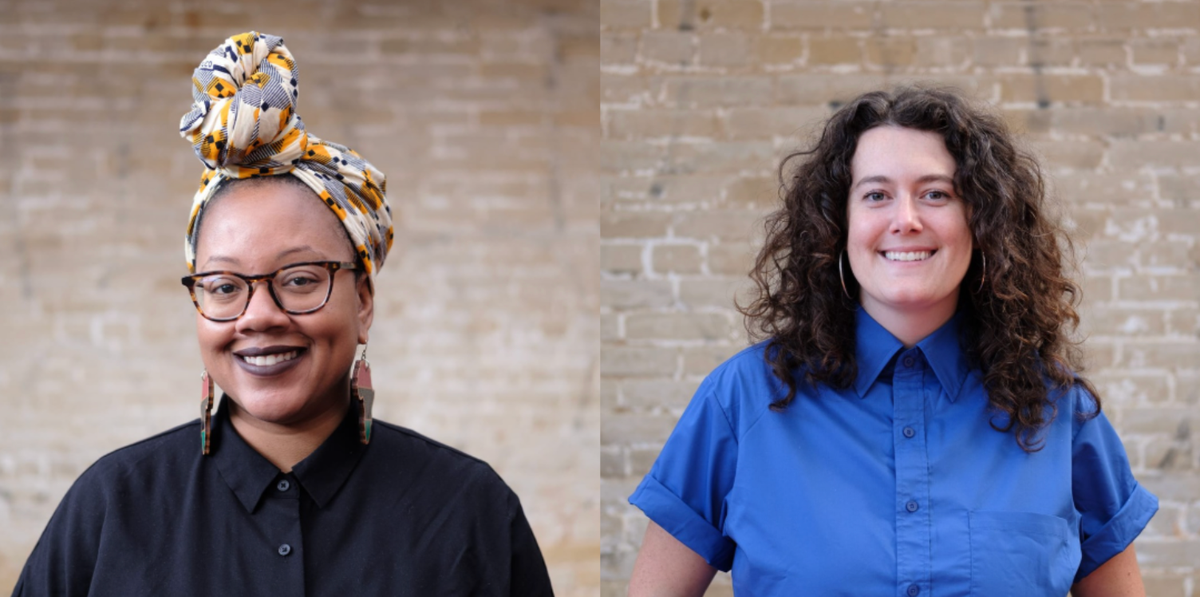
 TNC
TNC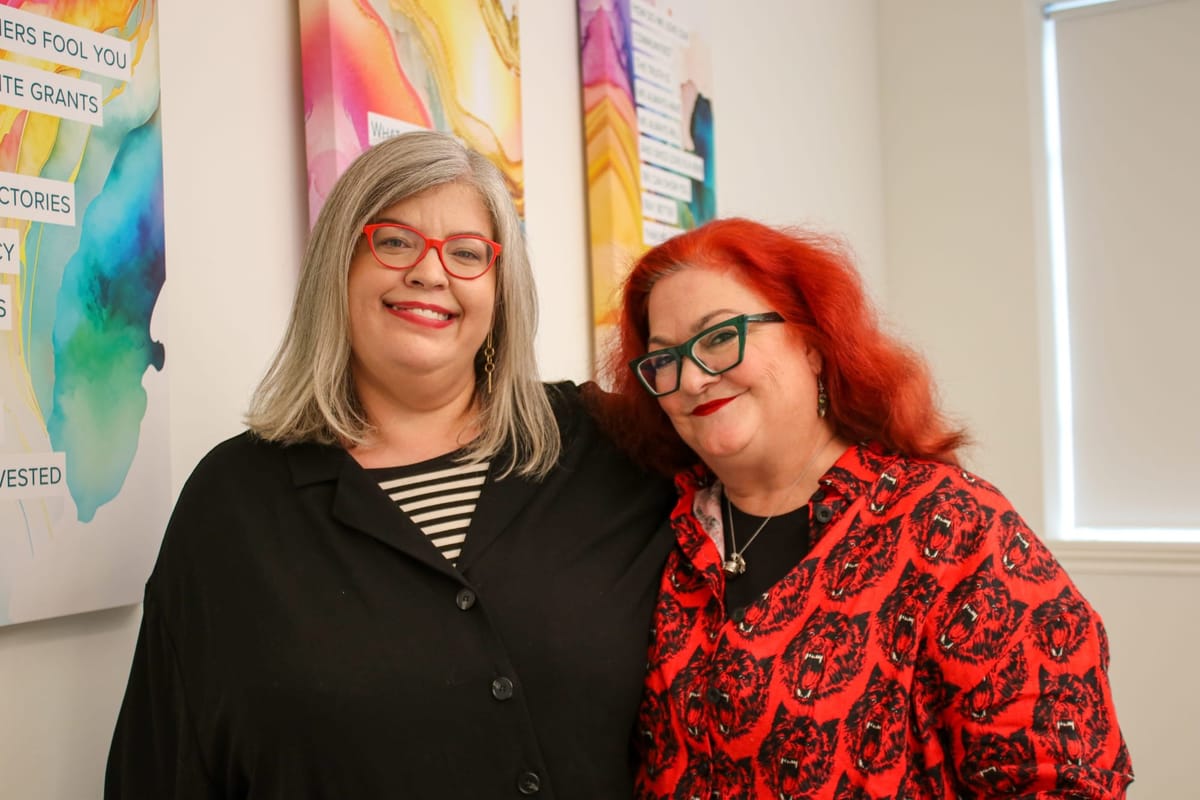
Sign up for our monthly newsletter for ongoing updates, announcements, and resources for newsroom entrepreneurs.